
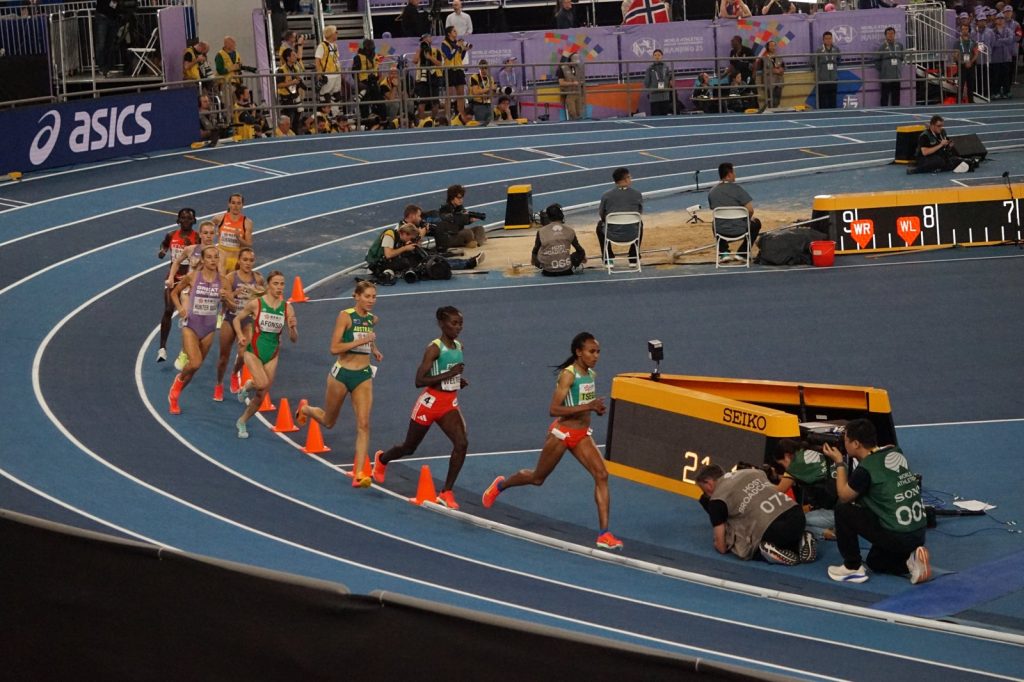
After three postponements and a global pandemic, the 20th World Athletics Indoor Championships were held in Nanjing from 21 to 23 March 2025. The event took place at the newly constructed Cube gymnasium, located within the Nanjing Youth Olympic Sports Park.
For the Chinese city, the championship represented more than just a medal tally; it marked a long-awaited return to the international sports calendar. Nanjing was originally scheduled to host the event in 2020, then again in 2021, and once more in 2023. Each time, China’s strict COVID-19 containment measures forced the cancellation of those plans.
The 2022 edition was moved to Belgrade, Serbia, while the 2024 championship went to Glasgow, United Kingdom. Throughout this period, Nanjing continued to wait for its opportunity.
The Cube gymnasium, built as part of the Nanjing Youth Olympic Sports Park, was designed specifically for events of this nature. For years, it remained without its headline competition. Now, it has one.
The championships themselves are a premier indoor athletics meet, featuring track and field events, jumping, throwing, and the full range of indoor disciplines. Top athletes from around the world participated.
However, the broader significance extends beyond the results board, focusing on what this means for the facility and the city. The Nanjing Youth Olympic Sports Park is a large complex with multiple sports venues, and the Cube is its newest addition. Hosting a global championship validates the investment in the facility. It demonstrates that the building can handle the demands of a live, international broadcast and accommodate thousands of spectators.
This is important for future bids, as other sports governing bodies observe such events. A smooth operation in Nanjing makes the venue a credible option for other championships.
It also benefits local use, as a stadium with a proven track record attracts concerts, exhibitions, and domestic competitions. The Cube now has a history, not just a design. For the athletes, the championships served as a platform.
For the city, they were a test. Nanjing passed.
The event occurred without cancellations or last-minute changes. The pandemic-related delays are now behind this city’s athletics story. What comes next remains uncertain.
The World Athletics calendar moves forward, and the 2026 indoor championships will be held elsewhere. Nanjing’s Cube will need to secure its role in the off-years.
Whether it can draw a consistent stream of events or become an expensive unused facility depends on what local organizers do now. They have a proven venue and a successful event to their credit, which is a strong position. The 2025 championships also closed a chapter for World Athletics.
The governing body had to repeatedly adjust its schedule due to China’s pandemic policies. Nanjing was a persistent gap in the roster.
Filling it restores some normalcy to the indoor circuit. The sport can now focus on what happened rather than what was canceled. For the athletes who competed, the medals are real, and the times and distances are official.
For venue managers, the city tourism board, and the local sports federation, the real competition begins now. The lights are off, the crowds have left, and the Cube needs its next act.




