
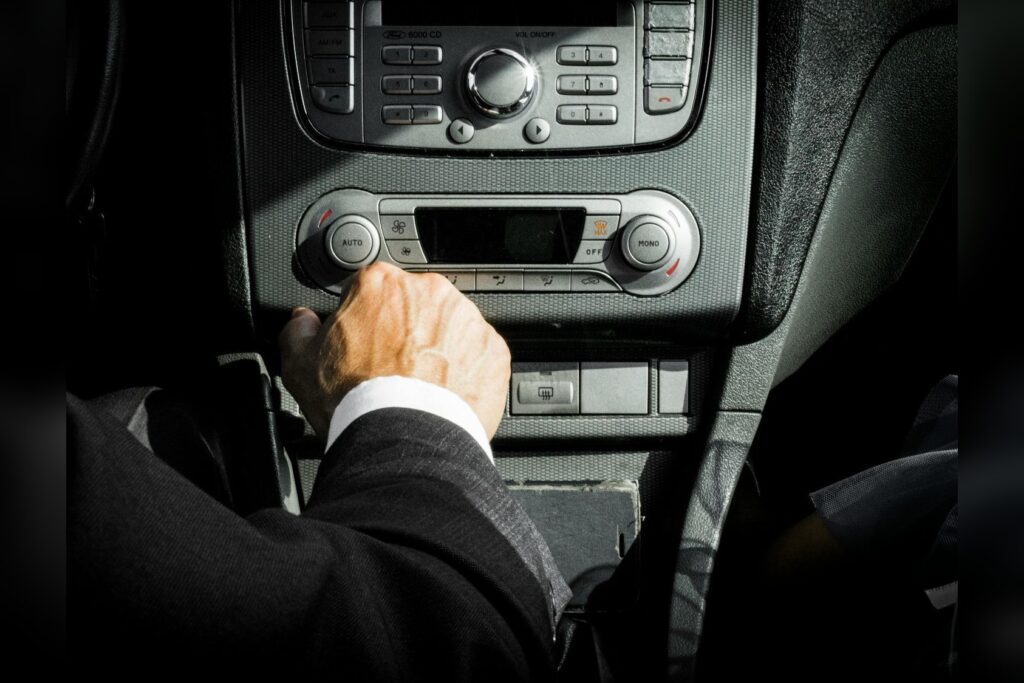
BEIJING, September 13, 2026 — China’s Ministry of Industry and Information Technology has proposed mandatory national standards requiring physical controls for essential vehicle functions, a move that would roll back the touchscreen-dominated interiors now standard in modern cars. The draft rules, open for public comment as of mid-2024, would mandate physical buttons, knobs or levers for turn signals, hazard lights, the horn, windshield wipers, gear selection and emergency braking. The proposal cites safety concerns, pointing to research showing touchscreen use increases driver distraction and reaction times.
It is not yet law and remains subject to change.
A shift away from the screen
The Chinese standards, if finalized, would apply to all new vehicles sold in China — the world’s largest auto market, where more than 30 million vehicles were sold in 2023. That reach is the salient point. Automakers including Tesla, BYD and NIO have integrated nearly all controls into large central displays, and a Chinese mandate would force design changes across the industry, not merely in one market.
Safety advocates have long argued that touchscreens force drivers to take their eyes off the road. Manufacturers have defended them as modern, customizable and cost-effective.
For all the noise about software-defined vehicles, the regulator appears to have sided with the advocates on the functions that matter most.
Europe moved first
The Chinese proposal follows similar action by Euro NCAP, the European car safety assessment programme, which announced in 2023 that starting in 2026 it will require physical controls for certain functions to achieve a top safety rating. Notably, the two efforts converge on the same principle: critical controls should be operable by touch, without a glance at a screen. If enacted, China would become the first major market to mandate physical controls for critical functions.
That could influence global automakers to redesign interiors for all markets, rather than build separate cabin layouts for China and everywhere else. The MIIT draft remains open for public feedback until a specified date, after which it may be finalized and implemented.
No implementation timeline has been specified. The story was first reported by various news outlets in 2024. What to watch next is whether the comment period closes without substantial revision, and whether other regulators follow Beijing’s lead.
The proposal is part of broader efforts to improve vehicle safety and could set a precedent for other countries.




