
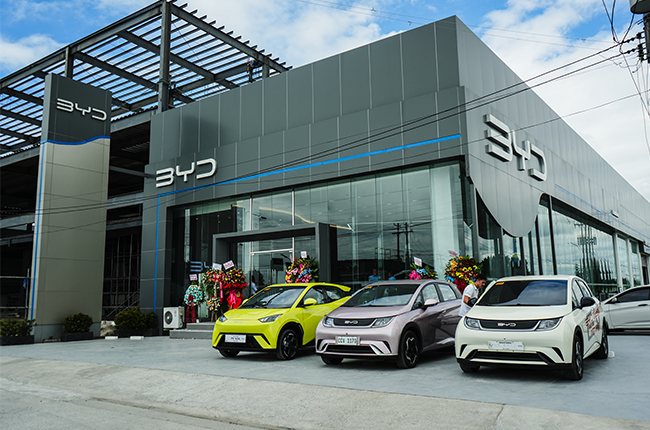
SHENZHEN, July 17 — Chinese electric vehicle maker BYD has set a five-year target to overtake Toyota as the world’s largest automaker by global sales, a goal it aims to achieve by 2029, while publicly ruling out the United States as part of its expansion plans, according to company announcements. The ambition places BYD, founded in 1995 by Wang Chuanfu as a rechargeable battery company before entering the auto industry in 2003, on a trajectory to challenge a Japanese industrial icon.
Toyota, established in 1937 by Kiichiro Toyoda, sold 11.23 million vehicles globally in 2023, making it the largest automaker by volume. BYD delivered 3.02 million new energy vehicles—including battery electrics and plug-in hybrids—that same year, establishing itself as the world’s largest EV maker by sales volume, according to the source material.
The five-year timeline is based on BYD’s projected compound annual growth rate of 30 percent in overseas markets. Toyota’s sales have been relatively flat at around 10 million units annually since 2019. BYD’s strategy relies on aggressive expansion into Southeast Asia, Europe, Latin America, and the Middle East, leveraging a vertically integrated supply chain that includes in-house battery production—the Blade Battery—and semiconductor manufacturing.
Geographic calculus and tariff barriers
BYD does not currently sell passenger cars in the United States. A 27.5 percent tariff on Chinese-made vehicles—comprising a 25 percent Section 301 tariff plus a 2.5 percent standard duty—along with regulatory hurdles, has kept the company out of the US market. This exclusion is explicit in BYD’s current plans.
The company has opened production plants in Thailand and Brazil in 2024, and plans a factory in Hungary in 2025. BYD’s chairman Wang Chuanfu stated the company aims to achieve 1.5 million annual sales outside China by 2025.
Toyota, by contrast, maintains a long-established global presence with production facilities in 27 countries and a strong hybrid vehicle lineup, including the Prius, launched in 1997.
Market valuations and workforce
BYD’s market capitalization reached $100 billion in 2024, compared to Toyota’s $280 billion. The Chinese company employs approximately 700,000 people worldwide, while Toyota employs about 375,000. The ambition reflects a broader shift in the global auto industry, where Chinese manufacturers are increasingly challenging established Japanese and Western automakers.
For Toyota, which has dominated global sales for years, the challenge from BYD represents a direct threat to its position as the world’s largest automaker by volume. What remains to be watched is whether BYD can sustain the growth rates needed to close the gap with Toyota within the stated timeline, particularly as it navigates tariff barriers in the US and regulatory environments across its target markets.




