
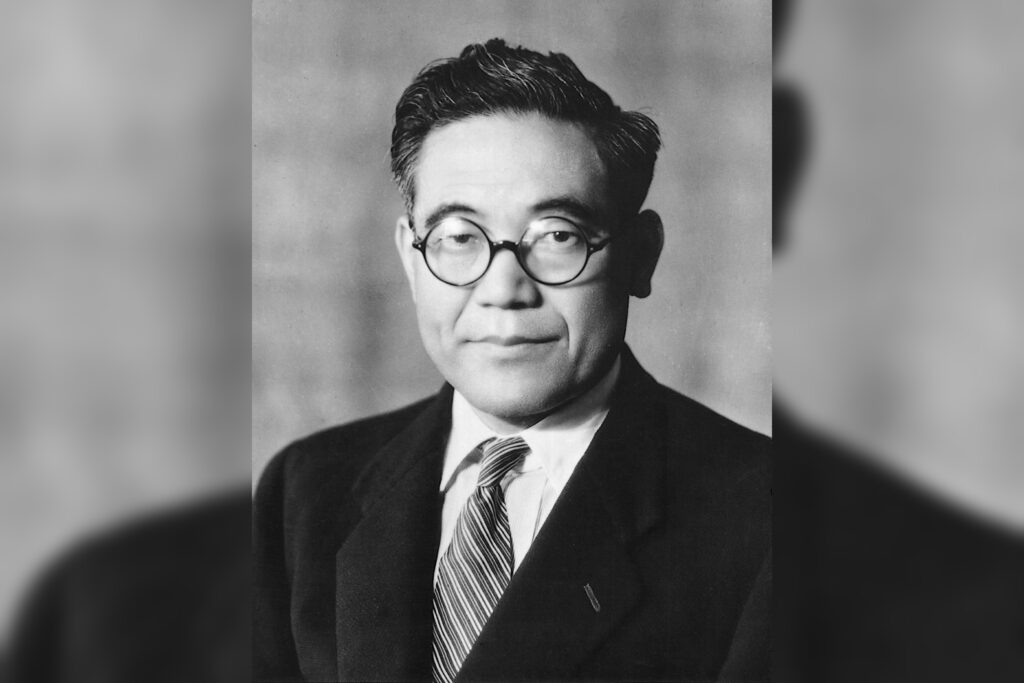
TOKYO, July 17 — The story of Kiichiro Toyoda begins not with cars, but with looms. Born in 1894 in Shizuoka Prefecture, Japan, he was the son of Sakichi Toyoda, the inventor of the automatic loom. That heritage of mechanical ingenuity would shape everything that followed.
Kiichiro studied mechanical engineering at the University of Tokyo, a path that would take him far from the textile mills of his father. In 1929, he travelled to the United States and Europe to study automotive manufacturing firsthand.
For those involved in the early days of Japan’s automobile industry, this was a pivotal moment — a chance to see what the industrialised West had built and imagine what might be possible at home.
From looms to automobiles
What unfolded was a deliberate, methodical transition. Kiichiro established Toyota Motor Co., Ltd. in 1937, spinning it off from Toyoda Automatic Loom Works. The company’s first passenger car, the Model AA, rolled out in 1936 — a year before the company was formally incorporated.
At its heart, this was a family enterprise built on a father’s invention and a son’s ambition. Kiichiro developed what became known as the Toyota Production System, a philosophy of manufacturing that would later form the basis for lean manufacturing worldwide.
The system emphasised efficiency, waste reduction, and continuous improvement — principles that remain central to the company’s identity.
War and recovery
During World War II, Toyota produced trucks for the Japanese military, a shift that redirected the company’s resources and workforce. The postwar years brought immense challenges. Kiichiro led the company’s recovery efforts, but the strain was severe.
In 1950, a labour dispute combined with financial difficulties forced his resignation. He died in 1952 at the age of 57.
For those who worked alongside him, his departure marked the end of an era — but his influence was far from finished. His legacy includes the Toyota Way, the management philosophy that continues to guide the company’s focus on quality and continuous improvement.
A family legacy
The Toyoda family remained deeply involved in the company’s trajectory. Kiichiro’s nephew, Eiji Toyoda, later became president and led Toyota’s global expansion, transforming a Japanese automaker into an international powerhouse. More recently, Akio Toyoda served as president from 2009 to 2023, carrying the family name into the 21st century.
What began with an automatic loom in Shizuoka Prefecture grew into one of the world’s largest automobile manufacturers. For those who study industrial history, Kiichiro Toyoda’s story is not simply about cars — it is about how innovation passes from one generation to the next, and how a single vision can reshape an entire industry.




