
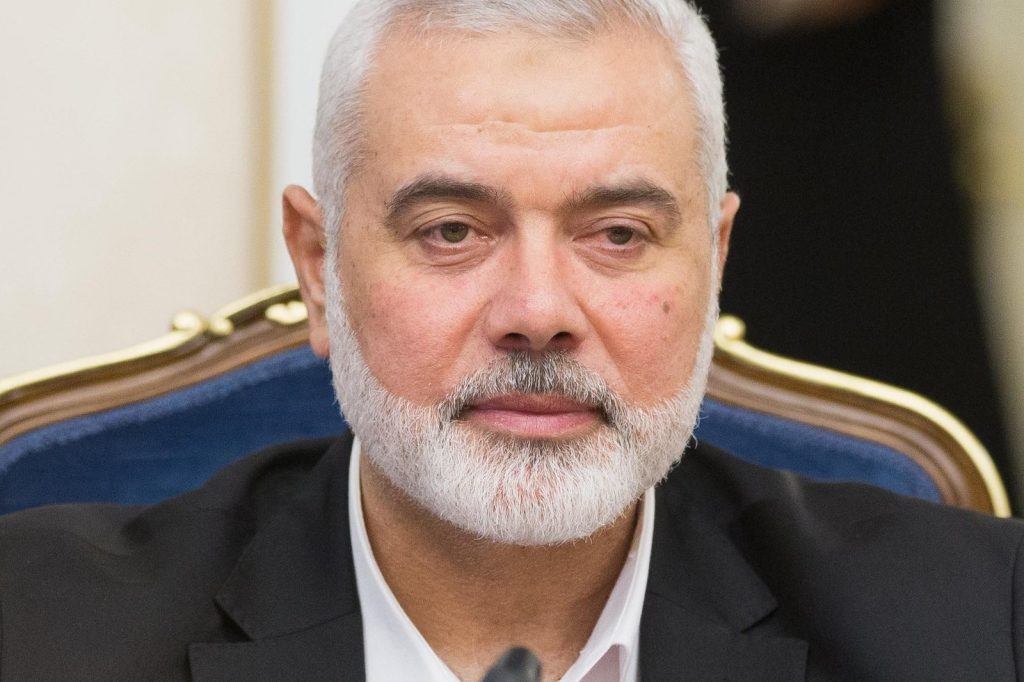
Early Life and Rise
Ismail Haniyeh was born into displacement; his parents had been expelled or fled from Al‑Jura, now part of Ashkelon, during the 1948 Palestine war. He grew up in the al‑Shati refugee camp in Gaza, which at the time was under Egyptian administration.
The camp environment and the outbreak of the First Intifada, the uprising that helped spawn Hamas, shaped his early years. In 1987 he received a bachelor’s degree in Arabic literature from the Islamic University of Gaza and, the same year, first became involved with Hamas. His activism led to three imprisonments after taking part in protests.
In 1992 Israel exiled him to Lebanon; he returned a year later. Upon his return he took a position as dean at Gaza’s Islamic University, a post that gave him academic cover while his political trajectory continued.
Leadership Tenure
Haniyeh’s formal rise within Hamas began in 1997 when he was appointed to head a Hamas office. By March 2006 he had become prime minister of the Palestinian National Authority, a role he held until June 2014. Overlapping that period, from June 2007 until February 2017 he served as the first Hamas leader in the Gaza Strip, a position later filled by Yahya Sinwar.
In May 2017 he was elected the third chairman of the Hamas Political Bureau, a post he retained until his recent assassination. Throughout these years Haniyeh was regarded more as a political operator than a battlefield commander.
His value lay in his ability to navigate internal factions, to negotiate with external actors, and to present a public face for the movement. He understood the refugee‑camp experience because he had lived it, he knew exile from personal experience, and he grasped Gaza’s internal politics from having administered it.
Implications of His Absence
Haniyeh’s death removes a figure who, despite his militant affiliations, acted as a pragmatist and a conduit for dialogue. His loss raises questions about the future balance inside Hamas. Sinwar, who assumed control of the Gaza leadership in 2017, is seen as a harder line figure more rooted in the military wing. Without Haniyeh’s mediating presence, the centrifugal forces between Gaza‑based commanders and the external leadership, as well as between the political and military branches, could intensify, potentially making the organization more rigid, more insular, or more fragmented. Regionally, Haniyeh had been a channel that states such as Egypt and Qatar used to engage with Hamas. That channel is now closed, meaning negotiations over ceasefires, prisoner exchanges, and the flow of goods into Gaza will proceed through different hands—possibly less experienced, possibly more hardline. The shift comes




