
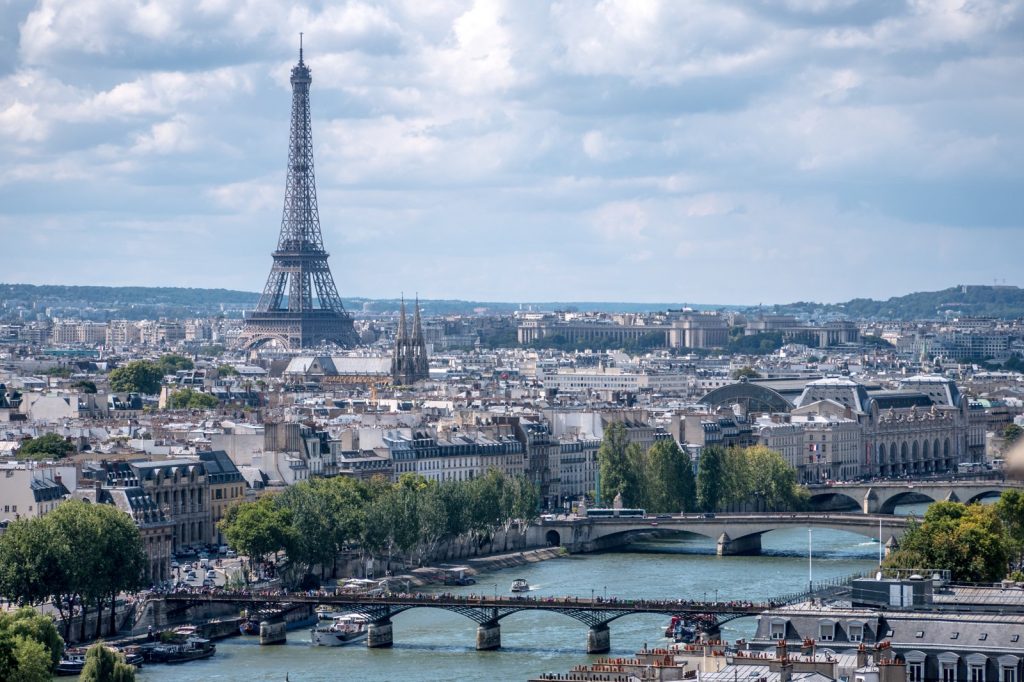
When the 2024 Summer Games concluded on August 11, Paris became only the second city in history to host the Summer Olympics three times. London holds the distinction of being the first. This achievement shifts how future host cities will be evaluated; a second Games is no longer a rare feat, while a third has emerged as the new benchmark. The shift traces back to a single decision made in 2017.
The International Olympic Committee awarded the 2024 and 2028 editions simultaneously during a vote in Lima, Peru. Paris secured the 2024 Games, while Los Angeles received the commitment for 2028.
That joint award solved the immediate dilemma of having two strong contenders without a loser, but it also established a new normal: the IOC can now bundle Games together, compelling candidate cities to make commitments far earlier than before. The 2024 edition stretched across an unprecedented geographic footprint. Football matches were staged throughout the Paris metropolitan area.
The sailing competition took place in Marseille, France’s second‑largest city, where organizers managed wind and wave conditions. Perhaps most strikingly, surfing was held at a site in Tahiti, part of French Polynesia, thousands of kilometres from the French capital.
This placement made the 2024 Games the most dispersed in modern memory. Hosting events in Tahiti produced ripple effects. Logistics, security, and media operations had to span an ocean, and the competition shone a spotlight on the island’s reefs and surrounding communities in a way no previous Olympics had.
Local groups voiced concerns over the construction of a judging tower on the famed Teahupo’o break, highlighting the environmental sensitivities of the venue. For Paris, the timing carried symbolic weight.
The 2024 Games arrived exactly one hundred years after the city’s 1924 Summer Olympics and the inaugural Winter Olympics in Chamonix. That centenary linked the event to a longer French legacy that began with the 1900 Paris Games—the second modern Olympiad ever staged. Consequently, Paris’s third hosting cements its permanent place in Olympic history.
Other cities with two Games each—Rome, Athens, Tokyo, and Los Angeles—are now watching closely. The question looms: will any of them pursue a third hosting opportunity?
The infrastructure legacy of Paris 2024 is already evident. Massive investments were made in venues, transport upgrades, and security systems. These assets remain after the athletes depart.
The Olympic Village, erected in the northern suburbs of Saint‑Denis, is slated for conversion into housing and office space. Whether the promised social and economic uplift for that area materialises remains to be seen.
Past hosts offer mixed outcomes: London’s East End regeneration after 2012 is often cited as a success, whereas Athens experienced post‑2004 decline. The 2024 Games also served as a test of the IOC’s newfound flexibility. The concurrent award process was described as a gamble; it succeeded this instance. The upcoming bidding cycle will be scrutinised to determine whether the IOC will repeat the approach or whether future candidate cities will view a dual award as a forced partnership rather than an advantage.
Los Angeles now has a four‑year window to prepare, armed with a template it may choose to emulate or avoid. Finally, the surfing competition in Tahiti has set a precedent for holding Olympic events in remote, ecologically delicate locales.
Future bids could look to locations such as Hawaii, Costa Rica, or Indonesia. While the 2024 Olympics crowned champions, they also rewrote the rules governing host selection, venue distribution, and long‑term legacy planning. The triple‑host club now has a new member, the IOC possesses a fresh playbook, and the distance between an Olympic site and its host city has never been greater.




