Tennessee’s used electric vehicle market expanded four-fold between 2019 and 2025, yet used EVs still accounted for just 1.4 percent of the state’s total used vehicle sales last year, according to a report from Atlas Public Policy produced in partnership with the Tennessee Department of Environment and Conservation’s Office of Energy Programs. Dealers and private sellers registered 7,166 used EVs in 2025, a substantial climb from the 1,908 registered in 2019, but a modest figure against the 507,000 used vehicles sold overall.
The Structural Drag
The technical reality is that the pool of eligible vehicles remains shallow. Tesla models represent roughly a quarter of all used EV sales in Tennessee across the study period, and cars and SUVs make up 97 percent of the used EV mix. Pickup trucks, a staple of the Southern market, accounted for less than 1 percent of used EV sales, a reflection of the fact that electric pickups were not available at meaningful volumes until 2023. More than half of the used EV listings in the state are for vehicles three years old or younger, and 34 percent are priced between $20,000 and $30,000. As the report notes, those relatively affordable price points reflect the faster depreciation EVs have historically suffered compared to combustion vehicles, though that gap has nearly closed as battery performance improves.
Regional Context
Tennessee sits in the middle of the Southern pack. Its 1.4 percent share outpaces Alabama, Kentucky, South Carolina and Mississippi, but trails Georgia at 2 percent and North Carolina at 1.7 percent. The comparison is instructive: Georgia and North Carolina have leaned harder into manufacturing incentives and charger deployment, creating a deeper reservoir of off-lease and trade-in stock. Tennessee’s growth is real — the report attributes it to a maturing market, a growing wave of lease returns, and falling prices nearing parity with gas vehicles — but the denominator, half a million used sales a year, dilutes the percentage.
Infrastructure and the 2028 Target
The state is attempting to address the infrastructure side of the equation. Tennessee closed a 400-mile loop of chargers connecting Nashville, Knoxville, Cookeville and Chattanooga in May 2025, placing fast chargers every 34 miles along the Fast Charge TN Network. The target is infrastructure capable of supporting 200,000 EVs by 2028. The Office of Energy Programs is accepting applications until Nov. 30 for the fourth round of its fast-charging grant program, offering up to $600,000 for station buildouts on key roadways. The report underpinning these figures drew on Experian sales data from 2019 through 2025, Cars.com listing data from early 2026, and Capital One loan filings from January 2019 through December 2025, supported by the U.S. Department of Energy’s Office of Energy Efficiency.
Sources
- Tennessee’s used EV market is growing, but stood at 1.4% of overall market in 2025
- Tennessee
- #11/9 Vols Improve to 3-0 with 83-78 Win over Tennessee State – University of Tennessee Athletics
- How to Follow: No. 8 Tennessee vs. Texas A&M
- Late Touchdown Lifts Football Past Eastern Illinois, 13-12 – Tennessee State University
- POSTGAME THOUGHTS: Aggies Anemic Offense Dooms Efforts Against Tennessee
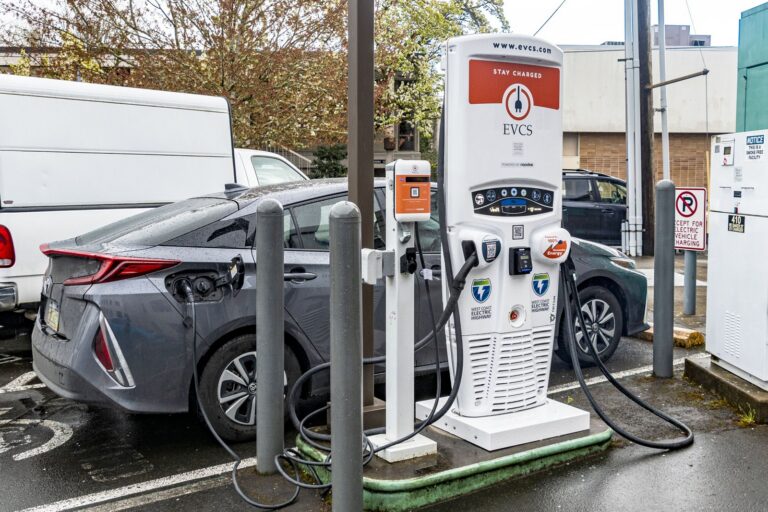
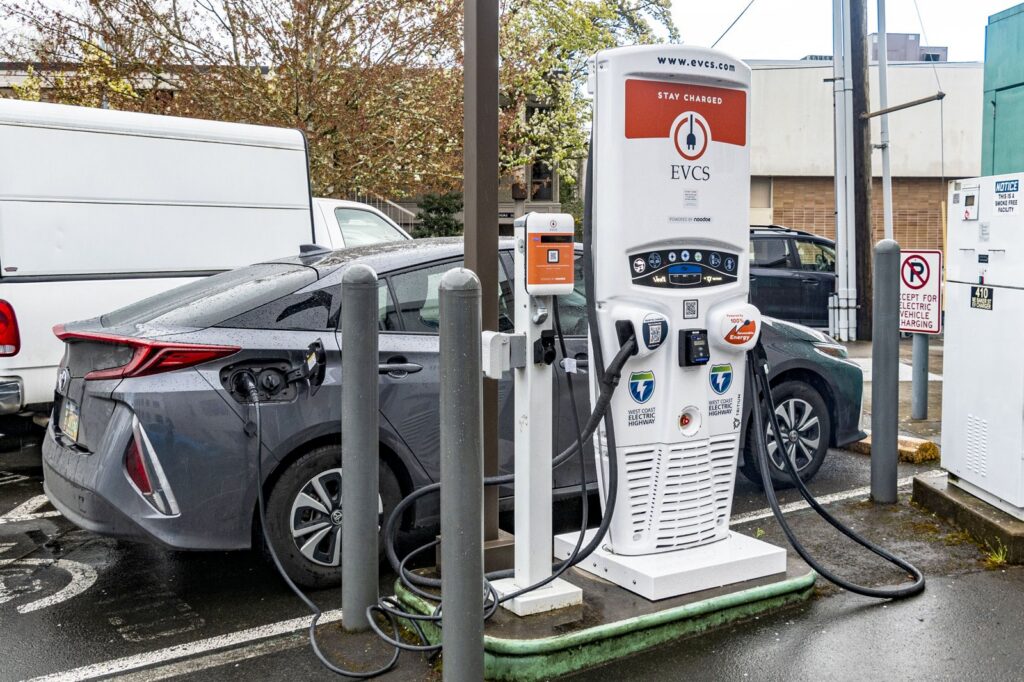
Photo: Oregon Department of Transportation / wikimedia (CC BY 2.0)