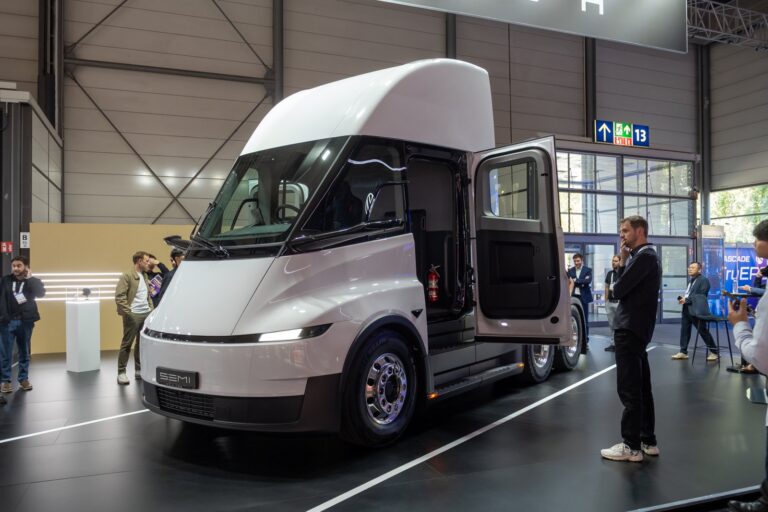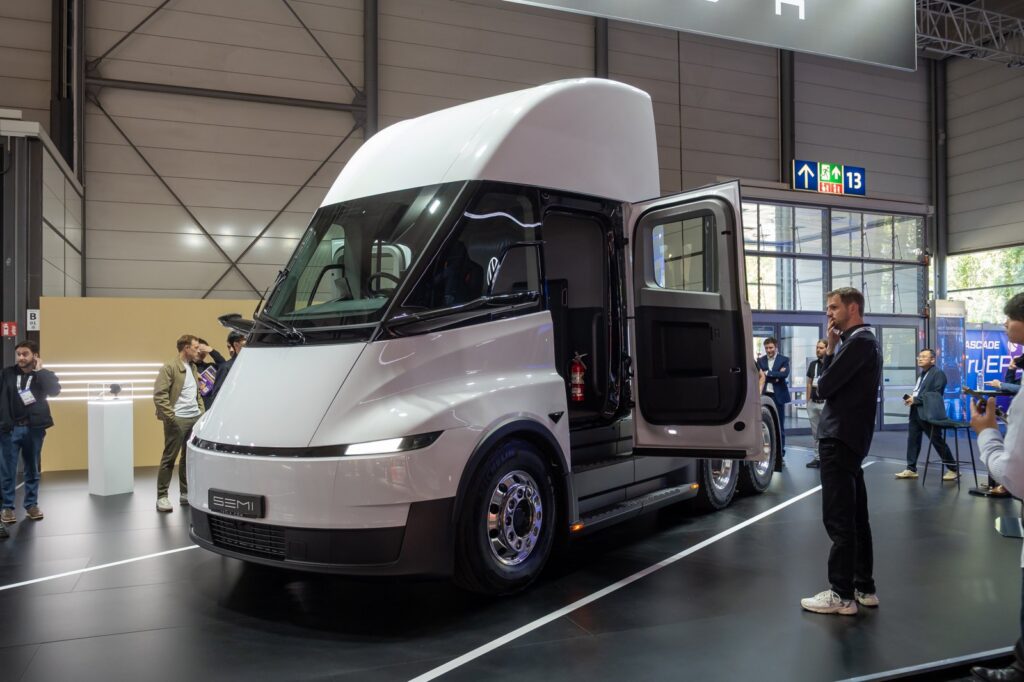
A diesel tractor that catches fire on a Bay Area freeway is a bad commute. A Tesla Semi that does the same shuts the whole road. On Tuesday, October 27, at about 5:35 p.m., a Semi burned in the southbound lanes of Interstate 880 in Hayward, near Route 92, and the California Highway Patrol closed both directions, citing “the potential risk of hazardous chemical smoke.”
No crash. No other vehicle. The driver got out unhurt and told officers the truck caught fire and he did not know why.
Ten hours of freeway
Northbound lanes reopened at 8:40 p.m. Southbound took until about 3:30 a.m. Wednesday. The CHP had warned the battery might burn for 15 to 18 hours and said there was “no ETO,” traffic shorthand for estimated time of opening, so drivers should expect extreme delays. Crews beat the estimate. CHP photos show firefighters laying foam around the burned-out tractor, with the front of a Premier Trailer Leasing trailer charred behind it. The operator has not been named, and Tesla has not commented. The cause is under investigation.
The missing crash
That absent collision is the detail that matters. The truck’s previous well-documented fire was a crash case. In August 2024 a Tesla-operated Semi left I-80 near Emigrant Gap on a curve, hit a delineator post and a tree, and the NTSB says its lithium-ion battery ignited after the impact. Firefighters used about 50,000 gallons of water, and lanes stayed shut for up to 15 hours.
A tree explains a battery fire neatly: cells crushed, cells short, heat builds. Without an impact the list of suspects grows. An internal cell fault, a coolant or wiring problem, the drive units, the high-voltage electronics, or something as ordinary as a dragging brake or a failed tire whose heat spread to the pack. Nobody outside the investigation knows which, and until someone says, operators are guessing as well.
Why responders treat it differently
Tesla’s own rescue sheet for the Semi describes a 1,000-volt lithium-ion system. Firefighters are told to pour on large amounts of water to cool the enclosure without submerging the truck, and to watch battery temperature for at least 24 hours because the pack can reignite. Afterwards the truck must sit outdoors at least 50 feet from other vehicles and buildings.
A diesel fire ends when the fuel is gone. A battery fire ends when the thermal camera says so. Closing a freeway over smoke looks cautious, but it matches the Emigrant Gap response, where crews were checking air quality as well as traffic. The NTSB’s 2020 report on EV battery fires covered three crash-damaged packs and one that ignited during normal driving. All three damaged packs reignited after firefighters thought they were out. The other did not. One data point, not a rule.
Perspective, then the awkward part
Truck fires are common. According to NFPA data, US fire departments responded to an average of 15,462 large-truck fires a year from 2018 to 2022, about 42 a day, in a fleet that is overwhelmingly diesel. Mechanical failure was a factor in 44% of them. Only about 2% involved a collision.
The Semi is not off the hook, though. Tesla does not disclose deliveries, and PepsiCo, the launch customer, had about 86 trucks in 2024. Volume production in Nevada began only this year, after nearly a decade of delays. WattEV ordered 370 Semis in May, mostly for drayage at the Port of Oakland, a few miles up I-880 from the fire. In September Tesla was named lead supplier on a 2,500-truck ZET SCALE order. With a fleet this small, a fire with no crash is a large data point, and it is the second to close a California interstate in about two years.
What fleets and insurers will ask
A fire without a collision is a different claim from a wreck, and the inquiry turns to maintenance records and telematics rather than a police diagram. Any operator running Semis would be wise to pull battery and thermal logs now. Insurers will want to know who pays for a multi-hour interstate closure, and what happens to cargo on a trailer parked next to a burning pack.
There is also a gap in the paperwork. The NTSB lists its Emigrant Gap investigation as ongoing more than two years on, with no probable cause published.
Sources
- A Tesla Semi Caught Fire on I-880 With No Crash, and CHP Shut Down Both Directions Over Possible Hazardous Smoke
- Tesla Semi catches fire on I-880 with no crash, closes freeway for 10 hours
- Tesla Semi Fire on I-880 Hayward: What We Know [2026]
- I-880 in Hayward reopens after Tesla semi-truck bursts into flames
- Tesla semi catches fire on I-880 in Hayward, blocks freeway for hours
Photo: Matti Blume (CC BY-SA 4.0)