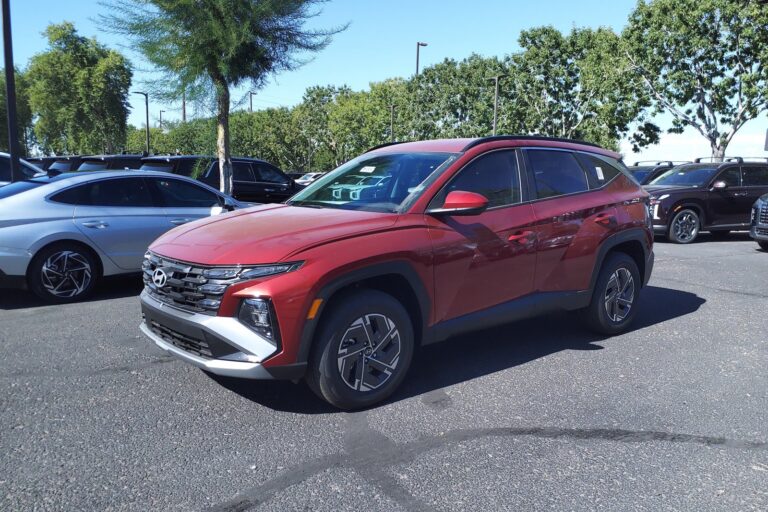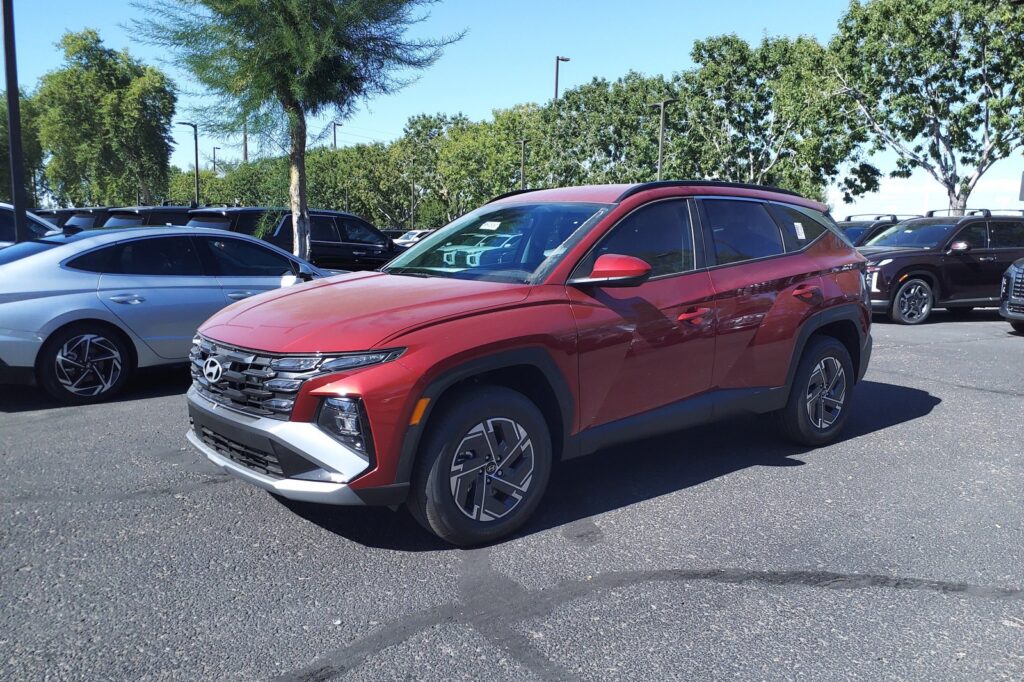
Hyundai is recalling certain Tucson Hybrid crossovers and Elantra sedans after discovering that flange nuts securing the front struts were not tightened to specification during assembly at the company’s Ulsan complex in South Korea. The defect could allow suspension components to separate at speed, increasing the risk of a crash.
The Technical Reality
The affected component is a flange nut, part number 62618-4D000, supplied by Samjin Nut. The nut itself is not defective. Rather, insufficient torque applied during vehicle assembly means the fastener can loosen over time. In a MacPherson strut front suspension, the strut connects the wheel assembly to the body, locates the steering knuckle, carries lateral loads and absorbs road impacts. If the connection fails, the strut can separate from adjoining suspension components, a condition that significantly increases crash risk, especially at freeway speeds.
Hyundai Motor America is not aware of any crashes or injuries related to the recall condition. The investigation began with a single field report received by the North American Safety Office from a 2026 model year Elantra owner who reported suspect noises from the front suspension while driving over bumps.
Scope and Production Details
The recall covers Tucson Hybrid crossovers produced between January 21 and March 20, 2026, and Elantra sedans assembled from December 30, 2025, through July 6, 2026. All affected vehicles were built at the Ulsan complex, currently described as the world’s largest integrated automobile manufacturing plant with six distinct manufacturing facilities employing more than 30,000 workers and producing more than 5,000 vehicles per day.
Hyundai Motor America surveyed potentially affected unsold vehicles through October 5, 2026, and identified two units with incorrectly tightened fasteners. The Elantra population in this recall is distinct from a separate, smaller recall involving 17 Venue crossovers and Elantras — including one Elantra N, four hybrids and four gas-only sedans — assembled in August 2026 for a lug nut torque issue.
Discovery and Investigation
The field report triggered an internal review that traced the condition to the assembly process at Ulsan. Hyundai’s North American safety team determined that the flange nuts on both front strut assemblies may have been under-torqued. The company has since implemented improved torque monitoring logic and production sign-off requirements at the Ulsan complex, changes that took effect on September 9, 2026.
Remedy and Owner Notification
Dealers have been instructed to inspect all potentially loose fasteners on both front strut assemblies. If necessary, the original parts will be retightened or replaced. A wheel alignment is required after the strut work because disturbing the strut hardware can alter alignment settings; skipping the alignment can lead to a pulling sensation and uneven tire wear. All repairs, including the alignment, will be performed free of charge even if the vehicle is no longer under warranty.
Customer notification letters will be sent by first-class mail no later than December 19, 2026. In the meantime, vehicle identification numbers for the affected crossovers and sedans are searchable on the National Highway Traffic Safety Administration’s recall portal.
Manufacturing Fix
The process changes at Ulsan address the root cause: the torque monitoring logic that allowed under-torqued fasteners to pass the production sign-off. Hyundai says the new logic and requirements have been in place since September 9, 2026, meaning vehicles assembled after that date should not exhibit the condition. As ever, the detail that matters is not the part but the process that installed it.
Sources
- Hyundai Recalls Tucson Hybrid and Elantra Vehicles for Improperly Tightened Strut Fasteners
- Hyundai Venue and Elantra Recalled for Potentially Loose Lug Nuts
- Based on Tesla's Latest Decision, the Cybertruck Is on Its Way Out; Will There Be a Replacement?
Photo: HJUdall (CC0)