Tesla’s Supercharger network has dropped to fourth place in the 2026 JD Power DC Fast Charging category, with Ionna, Rivian, and Mercedes finishing ahead of it. This marks a significant shift in the electric vehicle charging landscape, as Tesla’s network had previously led the category from 2021 to 2023.
Background And History
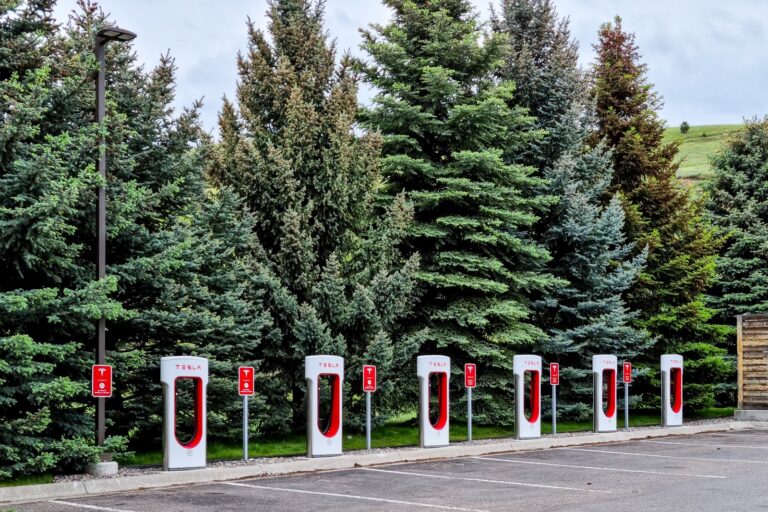
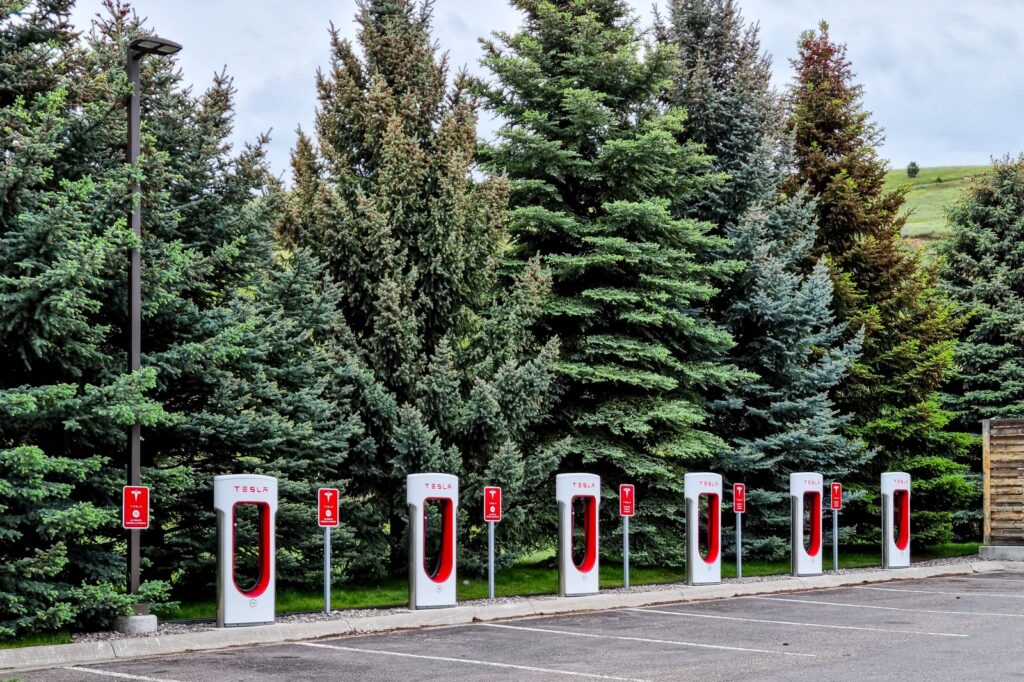
The Tesla Supercharger network was introduced on September 24, 2012, as the Tesla Model S entered production, with six stations in California. As of October 2026, Tesla operates a global network of 9,007 Supercharger stations with over 85,000 connectors. The network has been expanding rapidly, with approximately 2,700 new stalls added worldwide in the last quarter, including 1,287 in the U.S. According to CarBuzz, Tesla’s decision to open its Supercharger network to non-Tesla owners has introduced some friction into the network, with JD Power finding that overall DCFC satisfaction fell sharply in Q3 2024 as access expanded to non-Tesla vehicles.
Technical Reality
The technical reality of the Supercharger network is that it has a maximum power output of 500 kilowatts, with usage billed by the energy consumed during charging. As ever, the detail that matters is the ease of charging, speed, and availability, which are the key differentiators that have allowed Ionna, Rivian, and Mercedes to overtake Tesla in the JD Power study. Under the hood, Tesla’s Supercharger network uses a combination of V1, V2, and V3 stations, with the latter capable of delivering up to 250 kW. The network also features urban Supercharger posts, which have a maximum power delivery of 72 kW and are primarily deployed in urban areas.
Numbers And Implications
The numbers tell a significant story, with non-Tesla drivers now paying an average of $0.569 per kWh at Superchargers, a 15% increase over the past year. Tesla Supercharger prices have also risen 9% for members, who pay $0.396 per kWh. Additionally, congestion fees at Superchargers run $0.50 per minute when sites are half full and $1.00 per minute when full. As the network continues to expand, with 21 other vehicle manufacturers now having access to compatible NACS Superchargers, the implications for EV owners are significant. They must now consider trade-offs between price, convenience, and reliability when choosing a charging network. According to Not a Tesla App, the higher prices bring Tesla’s pricing in line with other fast chargers, but the smoother, friction-free experience may still justify the slightly higher cost.
Pricing And Fee Structure
Tesla Supercharger pricing has risen notably over the past year. According to Paren’s Q3 U.S. EV Fast Charging report, non-members now pay an average of $0.569 per kWh, a 15% increase year-over-year. Members, who pay the same rate as Tesla owners, saw their average price climb 9% to $0.396 per kWh. These increases pushed the national average for all public fast charging up roughly 2% to $0.540 per kWh, while the average for non-Tesla networks held steady at $0.533 per kWh for five consecutive quarters.
Beyond energy costs, drivers face time-based penalties at busy sites. In the U.S., congestion fees are $0.50 per minute when a station is at least half full and double to $1.00 per minute when completely full; these fees are waived if the vehicle is moved within five minutes. Idle fees also apply to vehicles that remain plugged in after charging completes. A typical 60 kWh session for a non-member now costs approximately $34.14, roughly $4.50 more than a year ago, amounting to an estimated $66 annual increase for the average non-Tesla driver relying solely on Superchargers for public fast charging.
Expanding Access and Network Friction
Tesla’s decision to open its infrastructure to a broader range of vehicles has fundamentally altered the user experience. Automakers have increasingly adopted the North American charging standard, now formalized as SAE J3400, allowing owners from 21 other manufacturers—including Ford, Rivian, GM, Mercedes-Benz, Hyundai, Kia, Honda, Toyota, BMW, and Volkswagen—to utilize compatible NACS Superchargers. While this expansion has provided significant value to the broader electric vehicle community, it has also introduced new challenges for the network.
According to CarBuzz, this shift may have contributed to Tesla’s decline in recent rankings by introducing friction into a system that previously offered seamless integration between the vehicle, charger, navigation, and payment processes. JD Power’s December 2024 E-Vision Intelligence Report noted that overall DC fast charging satisfaction fell sharply during the third quarter of 2024 as access expanded to non-Tesla vehicles. This decline is attributed to users potentially finding the Supercharger network more crowded, which complicates the ease of charging and availability that once kept Tesla at the top of industry rankings.
Regional Distribution And Deployment Innovations
As of October 2026, Tesla’s Supercharger network spans 9,007 stations globally, with the majority concentrated in three key regions: Asia Pacific leads with 3,610 stations, followed closely by North America at 3,594, and Europe accounting for 1,788 stations. This geographic distribution reflects Tesla’s strategic focus on high-demand markets, particularly in regions where long-distance travel and highway infrastructure support widespread EV adoption. The network continues to expand rapidly, with approximately 2,700 new stalls added worldwide in the most recent quarter alone, including 1,287 new connectors in the U.S. alone.
To streamline deployment and reduce installation costs, Tesla has introduced pre-fabricated designs such as its new pre-assembled Accordion Superchargers. These modular units are engineered to be easier and cheaper to install, allowing Tesla to scale its infrastructure more efficiently while maintaining consistent service quality across new locations. Additionally, Tesla has deployed mobile Supercharger stations since 2019, featuring urban Supercharger posts and a Tesla Megapack energy storage system mounted on semi-trailer trucks. These mobile units provide temporary charging capacity for events, seasonal demand surges, or when existing stations require maintenance, ensuring continued availability without prolonged disruptions.
Sources
- Tesla Thought It Owned EV Charging Forever, But Ionna, Rivian And Mercedes Showed Up to Take The Throne
- Tesla Supercharger
- Tesla Supercharger Prices Are Up 15% in the Last Year – Not a Tesla App
Photo: Dietmar Rabich (CC BY-SA 4.0)