
A single number has long governed the financial calculations of every automaker selling vehicles in the United States: $14 for each 0.1 mile per gallon that a manufacturer’s fleet average falls below the mandated standard. That penalty, multiplied by the company’s total U.S. production, is the enforcement mechanism behind the Corporate Average Fuel Economy (CAFE) standards, regulations first enacted by Congress in 1975 as a direct response to the 1973-74 Arab Oil Embargo.
The original goal of CAFE was to drive automotive innovation and curtail fuel consumption in the wake of the oil crisis, which caught the United States off guard and produced gasoline lines stretching for blocks. Today, the stated aims have expanded to include creating domestic jobs and cutting global warming.
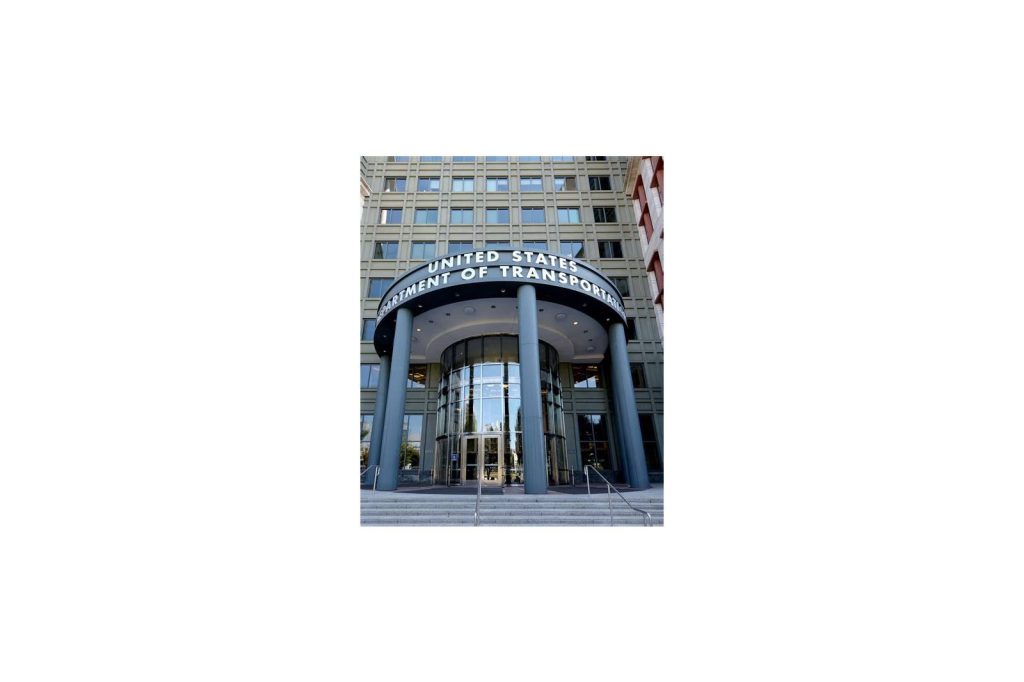
The standards are administered by the Secretary of Transportation through the National Highway Traffic Safety Administration (NHTSA). The mechanism is indirect: CAFE does not give consumers a direct incentive to buy fuel-efficient cars, nor does it directly affect gasoline prices. Instead, it penalizes automakers for building inefficient vehicles.
How the Standards Work
The Energy Policy and Conservation Act, as amended by the 2007 Energy Independence and Security Act, requires the Department of Transportation to set standards separately for passenger cars and light trucks at maximum feasible levels for each model year. DOT delegated enforcement to NHTSA.
The standards apply to cars and light trucks, including trucks, vans, and SUVs. More recently, efficiency standards were extended to heavy-duty pickup trucks and commercial medium-duty and heavy-duty vehicles. If a manufacturer’s fleet average falls short, the company must use CAFE credits it has banked from exceeding standards in prior years or pay fines.
The fleet average is calculated as the production-weighted harmonic mean fuel economy in miles per gallon for passenger cars or light trucks with a gross vehicle weight rating up to 8,500 pounds. A separate Gas Guzzler Tax applies to passenger car models — not trucks, vans, minivans, or SUVs — that get less than 22.5 mpg.
The structure remains the same as when it was created: the law did not tell consumers what to buy, but instead told manufacturers that if their fleets averaged below a certain miles-per-gallon threshold, they would pay a penalty. The original purpose was energy security, but the 2007 Energy Independence and Security Act required the Department of Transportation to set standards at the maximum feasible level for each model year and added cutting greenhouse gas emissions as an explicit aim. Today the stated goals include reducing oil dependence, creating domestic manufacturing jobs, and addressing climate change.
Preemption and Enforcement
U.S. law, specifically 49 U.S. Code § 32919, preempts any state or local fuel economy laws. That means states cannot set their own fuel economy mandates. This preemption ensures a single national standard rather than a patchwork of state requirements.
A study found that stringent CAFE standards combined with government incentives for fuel-efficient vehicles should accelerate demand for electric vehicles. With fines largely eliminated in 2025, the calculus for automakers investing in EV production has shifted.
That change reshaped the math for automakers. Without the threat of large penalties, the incentive to improve fuel economy weakened. At the same time, the push for electric vehicles has accelerated.
Research has shown that combining strict CAFE targets with government incentives for fuel-efficient vehicles should speed adoption of EVs.
Why This Matters Now
The regulatory landscape shifted in 2025 when fines for violating CAFE standards were largely eliminated. That changed the financial calculus for automakers. Without the threat of large penalties, the incentive to improve fuel economy weakened.
At the same time, the push for electric vehicles has accelerated. The tension between relaxed penalties and the ambition to electrify the fleet is at the center of current policy debates.
For readers, the outcome will shape what vehicles are offered for sale and how much it costs to own and operate them. The CAFE standards, first created in response to the 1973-74 Arab Oil Embargo, have evolved from a tool for energy security to one that also addresses climate change and domestic job creation. The elimination of fines in 2025 has altered the financial incentives for automakers, even as government incentives for fuel-efficient vehicles continue to push for greater EV adoption.
The balance between these forces will determine the direction of the U.S. auto market in the years ahead.




