
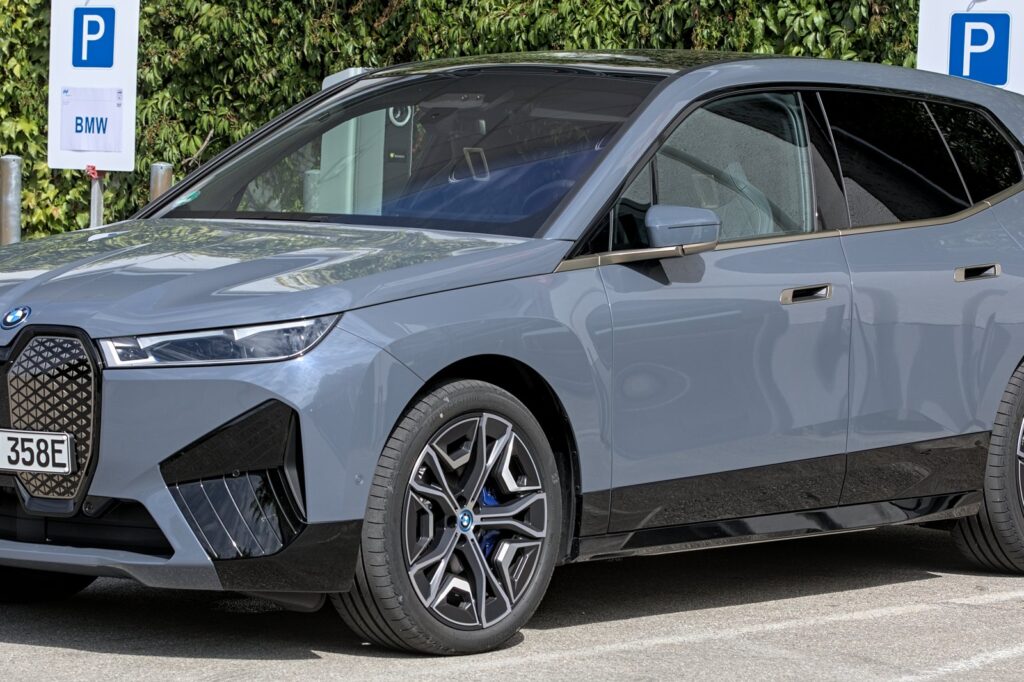
Premium electric vehicles are currently suffering from a sharp decline in resale value that far outpaces traditional internal combustion engine models. As battery technology evolves at a rapid pace, yesterday’s flagship luxury electric SUVs are finding themselves relegated to the secondary market at a fraction of their original cost.
The Rapid Depreciation of Luxury Electric Models
The financial reality for owners of high-end electric vehicles has become increasingly stark. According to CarBuzz, luxury electric vehicles like the Audi e-tron GT and the BMW iX are experiencing significant depreciation, with some models losing more than 60% of their value within five years. Data from iSeeCars suggests that the iX could lose as much as 69.2% of its original value over a five-year ownership period. In practical terms, this means a vehicle that once commanded an $80,000 price tag may be worth only $23,000 after half a decade.
This trend has created a unique opening for used vehicle buyers. For instance, a 2022 BMW iX xDrive50 with 48,874 miles recently appeared on the market for $33,836. While this provides a bargain for the secondary market, it highlights the volatility of electric vehicle residuals. The technical reality is that as manufacturers introduce newer, more advanced vehicle platforms, such as BMW’s Neue Klasse, older models often lose their appeal to buyers who prioritize the latest range and efficiency standards.
Battery Cycles and Technological Obsolescence
The battery is the most significant component of an electric vehicle, representing a large portion of the total cost and defining the long-term value of the machine. According to Wikipedia, the electric vehicle battery industry has seen immense growth, with demand exceeding 750 GWh in 2023. While lithium-ion batteries, specifically the lithium nickel manganese cobalt (Li-NMC) variant, have been the global standard since the 2010s, the field is moving quickly. New chemistries are emerging to address the limitations of older systems, such as the need for critical minerals like cobalt. Lithium iron phosphate (LFP) batteries have gained traction, capturing 41% of the global market share by capacity for battery electric vehicles in 2023. These alternatives are often cheaper and more sustainable, even if they differ in energy density compared to traditional lithium-ion setups.
The pace of cost reduction has also played a part in the depreciation of older models. Between 2010 and 2019, the cost of electric vehicle batteries fell by 87% on a per-kilowatt-hour basis. As battery capacity in new models continues to scale—ranging from 21 to 123 kWh in 2023 with an average of 80 kWh—older vehicles with smaller, less efficient packs appear less competitive. The detail that matters is that an electric vehicle is defined by its range and charging speed. When a new platform offers superior charging architecture or higher energy density, the previous generation of vehicles often sees its market desirability drop immediately.
Platform Shifts and Future Battery Integration
The automotive industry is currently pushing toward more efficient battery integration to improve vehicle performance and reduce weight. Companies such as ProLogium and Rimac Technology are developing next-generation battery platforms to refine cooling, safety, and mechanical integration. According to Interesting Engineering, these firms are focusing on cell-to-pack (CTP) architecture, which removes the need for individual battery casings to save space and reduce weight. By combining multiple high-energy density lithium battery cells into a more compact system, manufacturers aim to improve the overall efficiency of the vehicle.
However, the transition to these new systems is complex. Rimac Technology is currently testing how these designs affect heat management and mechanical integration at the vehicle level. The goal is to deliver state-of-the-art performance while keeping costs in mind, but the introduction of such advanced hardware inevitably puts pressure on existing models. As these next-generation platforms reach the showroom floor, the gap between the latest technology and the hardware found in four- or five-year-old electric vehicles widens. For the secondary market, this means that the value of an electric vehicle is tethered to the rapid, iterative progress of its internal power storage, making luxury electric models particularly sensitive to the march of technological development.
Battery Cycles and Technological Obsolescence
The battery is the most significant component of an electric vehicle, representing a large portion of the total cost and defining the long-term value of the machine. According to Wikipedia, the electric vehicle battery industry has seen immense growth, with demand exceeding 750 GWh in 2023. While lithium-ion batteries, specifically the lithium nickel manganese cobalt (Li-NMC) variant, have been the global standard since the 2010s, the field is moving quickly. New chemistries are emerging to address the limitations of older systems, such as the need for critical minerals like cobalt. Lithium iron phosphate (LFP) batteries have gained traction, capturing 41% of the global market share by capacity for battery electric vehicles in 2023. These alternatives are often cheaper and more sustainable, even if they differ in energy density compared to traditional lithium-ion setups.
The pace of cost reduction has also played a part in the depreciation of older models. Between 2010 and 2019, the cost of electric vehicle batteries fell by 87% on a per-kilowatt-hour basis. As battery capacity in new models continues to scale—ranging from 21 to 123 kWh in 2023 with an average of 80 kWh—older vehicles with smaller, less efficient packs appear less competitive. The detail that matters is that an electric vehicle is defined by its range and charging speed. When a new platform offers superior charging architecture or higher energy density, the previous generation of vehicles often sees its market desirability drop immediately.
Furthermore, recent advancements in battery longevity are accelerating the obsolescence of older hardware. While early lithium-ion batteries were adapted from consumer electronics, modern variations are being engineered specifically for longer lifespans. For instance, cells containing single wall carbon nanotubes show increased mechanical strength, which suppresses degradation. As manufacturers integrate these longer-lasting, more resilient battery technologies into newer fleets, vehicles relying on older, faster-degrading chemistry become less attractive to secondary market buyers who prioritize long-term reliability and sustained performance.
Sources
- A $107,995 Audi EV Now Sells From Under $50,000, And BMW's iX Follows The Same Curve
- Electric vehicle battery
- Next-generation EV battery targets faster charging with less weight
Photo: Alexander Migl (CC BY-SA 4.0)




