
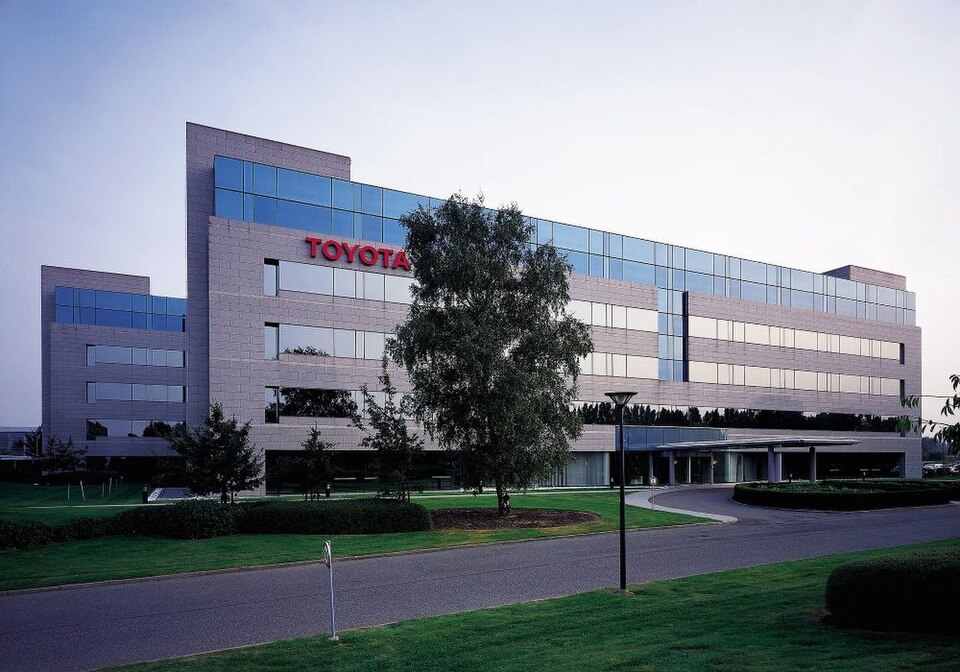
Toyota Motor Corporation reported global sales of 11.23 million vehicles in 2023, reaffirming its position as the world’s largest automaker by production volume, a title it has held for most years since 2008. The Japanese automaker, which traces its origins to a spinoff from Toyoda Automatic Loom Works in 1937, produced its first passenger car, the Model AA, a year earlier.
Today, the company operates 70 manufacturing plants across 27 countries and employs approximately 375,000 people. Its market capitalization stood at $280 billion in 2024.
A Legacy of Scale and Innovation
Toyota’s 2023 sales breakdown highlights its diversified portfolio: 3.4 million hybrid vehicles, 104,000 battery electric vehicles, and 7.7 million internal combustion engine models. The Corolla, introduced in 1966, remains the company’s best-selling model with over 50 million units sold. The Prius, launched in 1997 as the world’s first mass-produced hybrid car, has surpassed 6 million units in sales.
Toyota has also been a leader in hydrogen fuel cell technology, launching the Mirai in 2014. Despite these milestones, overall global sales have remained relatively flat at around 10 million vehicles annually since 2019.
The company’s history of deliberate expansion began under Kiichiro Toyoda, who established Toyota Motor Corporation in 1937 after developing the Type A engine and the Model AA. His father, Sakichi Toyoda, had founded Toyoda Automatic Loom Works. Toyota rode Japan’s post-war economic boom, using rising domestic demand to launch the Corolla in the 1960s and build a global presence. That slow, evidence-based approach carried the company to the top of global production in 2008, a pattern that continues to define its strategy.
Leadership Transition and Strategic Direction
In April 2023, Koji Sato succeeded Akio Toyoda – the founder’s grandson – as president of Toyota. Sato now oversees a company balancing entrenched strengths in hybrids and internal combustion engines with growing investment in battery electric vehicles.
Toyota has announced plans to invest $13.5 billion in EV battery production by 2030. Yet the company is not abandoning its hybrid or hydrogen fuel cell work; instead, it is adding battery EVs to its portfolio. For industry watchers and investors, the central question is how quickly Toyota can scale its EV production while maintaining the quality reputation that underpinned its decades-long rise.
The company’s current strategy follows its traditional cautious, evidence-based playbook – investing billions in new technology without discarding proven platforms. That diversified approach places Toyota at the center of ongoing debates about the future of automotive propulsion, as the global auto market continues its slow but steady shift toward electrification.
The coming years will test whether this balanced strategy pays off. Toyota’s history suggests a long-term perspective, but the pace of change in the electric vehicle sector may challenge that patience. For now, the data show a company positioning itself for multiple futures, keeping all powertrain options open even as it pours capital into battery production.
Your financial advisor can provide specific guidance on Toyota’s market position, but the underlying facts indicate a deliberate effort to navigate the transition without abandoning the strengths that made it the world’s largest automaker.




