
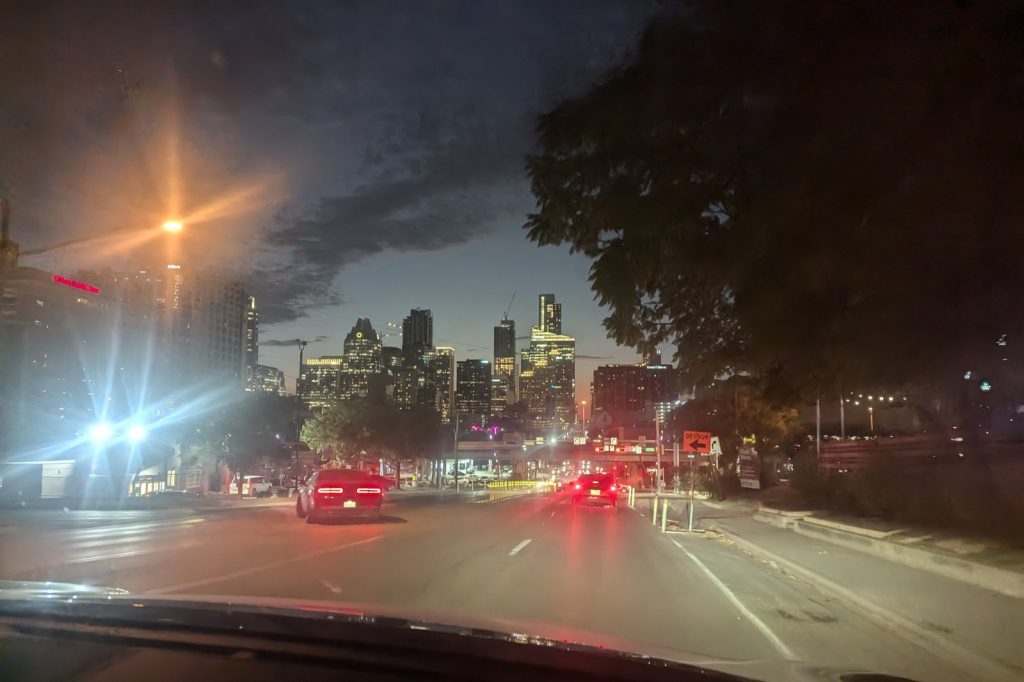
In Austin, Texas, two weeks ago marked the commencement of Tesla’s robotaxi service for paying passengers. However, the initial days have been marred with incidents such as cars drifting into oncoming lanes, unexpected braking, and drop-offs in the middle of intersections. This launch, initially billed as a triumph for Elon Musk’s long-awaited autonomous future, has instead become a test of the technology’s readiness for real-world roads and regulatory acceptance.
Each Tesla robotaxi on the road in Austin features a human safety monitor in the front passenger seat, acknowledging the system’s lack of complete reliability. This is due to the documented history of erratic behavior by Tesla’s Full Self-Driving software.
Furthermore, federal regulators are closely monitoring the situation, with the National Highway Traffic Safety Administration (NHTSA) yet to announce a formal investigation but showing a pattern of doing so after a series of incidents. Early users have reported a range of issues, including wrong-way driving, phantom braking, and drop-offs in active traffic lanes. Each incident serves as a data point for NHTSA, which is known for collecting such data points.
Musk envisions the robotaxi network as a crucial part of Tesla’s long-term strategy, with personal vehicles joining a shared autonomous fleet to generate income while their owners sleep. However, the current state of the service in one city, with a small fleet and human backup drivers in every vehicle, reveals a significant gap between the vision and reality.
The vision encompasses millions of vehicles, no drivers, and seamless trips. The reality, on the other hand, presents a handful of cars, a safety monitor in every passenger seat, and a growing list of complaints from the initial wave of riders. This gap has implications for Tesla’s stock price, its regulatory standing, and the broader autonomous vehicle industry, which has watched Tesla promise full self-driving for years while competitors like Waymo operate limited commercial services with more conservative technology stacks. Tesla claims that the service will eventually be compatible with all current Tesla vehicles.
For now, the company is focusing on a limited rollout, without disclosing the exact number of cars in the Austin fleet or the timeline for removing safety monitors. Additionally, they have not specified the criteria that will trigger an expansion to other cities.
The robotaxi launch has already attracted the kind of attention that often slows down autonomous vehicle programs. NHTSA has a history of issuing subpoenas, demanding data, and ordering recalls when it identifies patterns of dangerous behavior. The agency moves slowly, but it does move.
For the riders who have already used the service, the experience has been varied, with some posting videos of smooth rides and others sharing videos of near-misses. The inconsistent quality of the rides suggests that the software is not yet handling all edge cases reliably, which can be fatal for autonomous vehicle programs.
The coming weeks will provide valuable insights. If NHTSA initiates a formal investigation, Tesla will be required to provide logs, software versions, and internal safety assessments. If the incidents continue, the company may need to move the safety monitors from the passenger seat to the driver’s seat.
If the incidents cease, Tesla can present the data to argue that the system is improving. At present, the robotaxi service functions as a proof-of-concept with training wheels.
The question is whether those training wheels come off before the regulators intervene.




