
The Technical Reality of Power Seats and Fire Risks
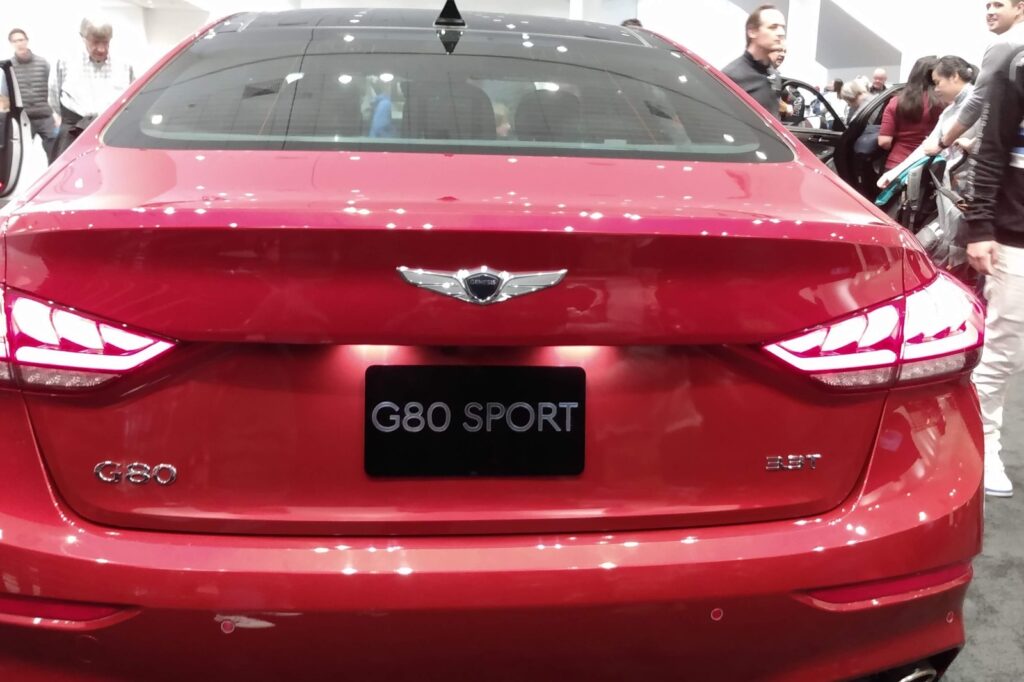
Under the hood of Hyundai’s latest safety crisis sits a mundane component with a dangerous mechanical flaw. Hyundai is recalling 94,622 vehicles over a fire risk associated with the overheating of motors on powered front seats, according to a National Highway Traffic Safety Administration recall report. The recall affects 39,978 model year 2017-2020 Genesis G80 and 54,644 model year 2015-2016 Hyundai Genesis sedans. According to a statement provided by Hyundai to FOX Business, the front seat slide and height adjustment control switch used on non-memory power seats in the subject vehicles may become dislodged or damaged when subjected to external forces. This can potentially cause the switch to remain engaged and the seat adjustment motor to operate continuously, even after the occupant exits the vehicle. The National Highway Traffic Safety Administration stated that prolonged use of the motor may result in overheating, increasing the risk of a fire while driving or parked. The agency added that warning signs include a burning odor and inoperative seat control switches. Hyundai estimates that one percent of the vehicles under recall have the defect, and the company has stated that it is aware of two incidents involving a fire associated with the defect. As of October 1, the company reported that there have not been any crashes or injuries related to the issue in the United States. As ever, the detail that matters for owners is practical: the National Highway Traffic Safety Administration recommends that owners of the affected cars park outside and away from other vehicles or structures until the repair has been completed, according to the recall documentation. A remedy for the recall is currently in development, and owners will be notified via mail before bringing their vehicles to a Hyundai dealer or Genesis retailer for the repair.
Historical Reliability and Long-Term Consumer Trust
The current mechanical failures arrive against a backdrop of long-term commercial efforts to build consumer confidence across international markets. Hyundai has been selling cars in Europe for nearly 50 years, and in that time, customers have come to trust our vehicles, the company noted in public materials. That historical longevity in overseas markets forms the bedrock of the brand’s identity, contrasting sharply with sudden component failures that require federal safety interventions. Managing quality control across millions of units has always tested traditional manufacturing lines, even as legacy automakers expand their footprints. The tension between historical reliability and modern component complexity defines much of the current automotive discourse, particularly when vehicle features multiply.
Ambitions in Robotics and Autonomous Mobility
While dealing with seat motor recalls, corporate leadership is pushing the brand aggressively into advanced software, robotics, and artificial intelligence. At the inaugural Hyundai Motor Group Tech Talent Forum held at the San Jose McEnery Convention Center in Silicon Valley, executives outlined a future where the company transforms its core operations. José Muñoz, President and CEO of Hyundai Motor Company, stated that Hyundai is becoming a technology and physical AI company, building robots, deploying autonomous vehicles, and developing software to make it all work seamlessly. Muñoz added that the group has the financial firepower and scale to achieve our ambitious vision. Manfred Harrer, President and Head of the Research and Development Division, addressed the technical transition by noting that the question is not physical versus virtual, but rather how to combine decades of real-world engineering experience with the speed of virtual development and artificial intelligence. Minwoo Park, President and Head of the Advanced Vehicle Platform Division and CEO of 42dot, pointed to the group’s scale of producing seven to eight million vehicles annually as the foundation for a physical artificial intelligence system that never stops learning. Parallel to these recruitment and development forums, the company displayed its broader technological direction at the Paris Motor Show. The company presented the world premiere of the all-new BAYON, the European-specification TUCSON and TUCSON N Line, and the all-electric STARIA Cargo light commercial vehicle, alongside robotics capabilities and an ongoing partnership with Waymo to explore the expansion of autonomous mobility in international markets.
Market Position and Future Implications
The juxtaposition of multi-billion-dollar technology initiatives with basic hardware recalls highlights the central challenge facing large global manufacturers today. Balancing the rapid deployment of artificial intelligence, robotics, and advanced electric platforms with traditional mechanical durability remains a delicate engineering tightrope. When federal regulators advise motorists to park specific luxury sedans outside due to spontaneous combustion risks from seat adjustment motors, consumer attention inevitably pivots back to fundamental build quality. As Hyundai scales its production and deepens its international partnerships, navigating these recurring component vulnerabilities will determine whether its high-tech ambitions outpace its physical execution.
Strategic Growth and Regional Market Commitments
Beyond its domestic safety challenges, Hyundai is actively pursuing a strategy of regional expansion and brand diversification. At the Paris Motor Show, the company highlighted its European growth through the world premiere of the all-new BAYON B-SUV and the introduction of the all-electric STARIA Cargo light commercial vehicle. These product launches are supported by long-term regional investments and a localization approach, exemplified by the IONIQ 3, which was designed and developed specifically for European customers.
The company is also utilizing high-profile partnerships to strengthen its market presence. Hyundai has solidified its commitment to customer interaction through a multi-year partnership with the UEFA Champions League. This initiative aims to connect the brand with football fans across borders and generations, complementing its broader efforts to integrate advanced technology into its vehicle lineup, such as the Gleo AI intelligent voice assistant and Pleos Connect systems featured in the new TUCSON.
Sources
- Hyundai Motor Company Presents All-New BAYON and TUCSON SUVs Plus Key Brand Initiatives at Paris Motor Show
- How Hyundai Motor Group Is Winning Tomorrowâs Tech Talent by Showing Them the Future
- Hyundai recalls more than 94,000 vehicles over fire risk
Photo: DestinationFearFan / wikimedia (CC BY-SA 4.0)




