
Prize Money Rises Amid Player Pressure
The men’s and women’s singles champions will each earn a substantial sum from the 64.2 million pound pool. The increase builds on a long arc of prize evolution at Wimbledon: from modest sums in the early 20th century, to the introduction of professional participation in the Open Era in 1968, to the tournament’s current structure where prize money now constitutes a major share of revenue. Player campaigns for a larger cut of Grand Slam earnings have been a point of contention in recent years, and the 20 percent bump—the largest single-year jump in recent memory—suggests those demands are gaining traction. While Wimbledon has historically been the last major to adopt certain changes, it has steadily increased payouts since the equal-pay debates of the 2000s, and this year’s raise matches the financial momentum seen across the other Slams. For context, the Australian Open main draw attracted over 1.1 million attendees this year, the French Open drew a substantial crowd, and the U.S. Open surpassed 900,000 for its main draw—numbers that underpin the sport’s growing fan base and the economic rationale for higher player compensation.
Video Review Technology Arrives on Grass
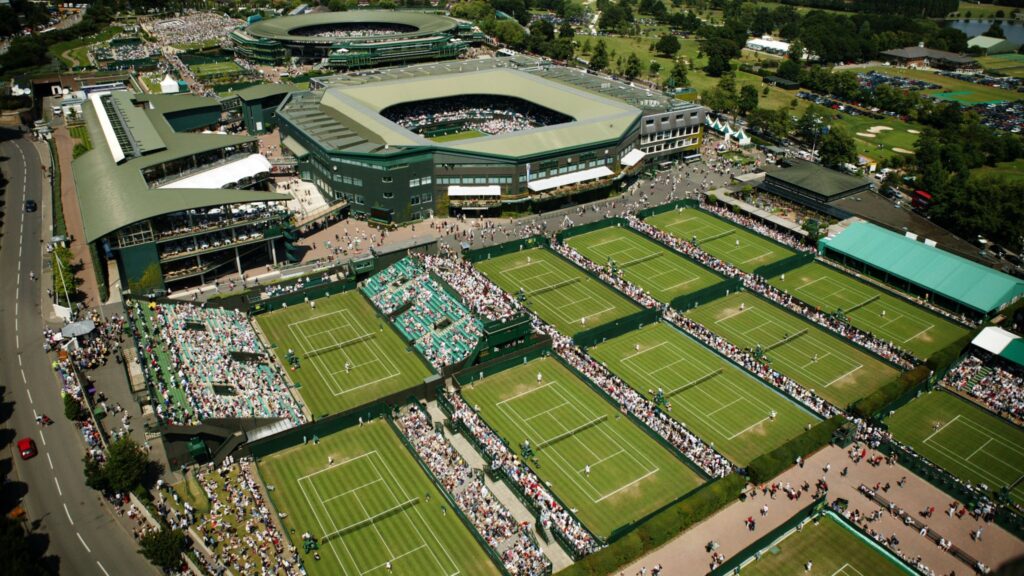
For the first time, Wimbledon will deploy video review technology, allowing players to challenge specific chair umpire calls, such as double bounces. The system, which made its Grand Slam debut at the 2023 U.S. Open, will be available on Centre Court, No. 1 Court, and four other show courts. This marks an expansion of electronic review at Wimbledon, which introduced Hawk-Eye for line calls in 2007, following the U.S. Open’s initial adoption in 2006. The addition of video review represents the tournament’s latest step in blending tradition with technological innovation—a balance that has defined Wimbledon since it became the only major still played on grass, the sport’s original surface. The club has also gradually enlarged courts and facilities, including retractable roofs on Centre Court and No. 1 Court to minimize weather disruptions. Last year’s attendance reached a record high for Wimbledon, though it remains the lowest among the four Grand Slams. The earlier introduction of roofs helped sustain crowd numbers, and the new review system is expected to further enhance the fan and player experience.
Wide Open Women’s Field Features New Champion
This year’s women’s singles draw is considered unusually competitive. No. 1 Aryna Sabalenka enters as a slight favorite, ahead of 2022 champion Elena Rybakina. French Open champion Mirra Andreeva and defending Wimbledon champion Iga Swiatek are also strong contenders. Sportsbooks have listed Andreeva at +700 and Swiatek at +800, reflecting the depth of the field. The unpredictability echoes the broader dynamics of the women’s game, where no single player has dominated on grass. Wimbledon’s grass courts reward serve-and-volley styles and alter strategies compared to the slower clay of the French Open or the hard courts of the U.S. and Australian Opens. The tournament’s two-week schedule and traditional rest days—including the absence of play on Middle Sunday—shape player preparation and recovery, adding another layer of strategic consideration. Founded in 1877 as a men-only competition, Wimbledon introduced women’s singles in 1884, joined the Grand Slam circuit in 1925, and suspended play during both world wars before embracing professionalism in the Open Era. Its enduring traditions—white clothing, strawberries and cream, and its grass surface—remain intact, but this year’s innovations signal that the world’s oldest tennis tournament is adapting to the modern game without abandoning its heritage. With prize money at a record high and technology narrowing the margin for human error, Wimbledon 2026 is poised to be a defining tournament in the sport’s evolution.
{“@context”: “https://schema.org”, “@type”: “NewsArticle”, “headline”: “Wimbledon Boosts Prize Money by 20% Amid Player Pressure”, “description”: “Prize Money Rises Amid Player Pressure The men’s and women’s singles champions will each earn a substantial sum from the 64.2 million pound pool. The…”, “datePublished”: “2026-06-22T09:30:00+00:00”, “author”: {“@type”: “Person”, “name”: “Arjun Mehta”}, “publisher”: {“@type”: “Organization”, “name”: “InfoPulse Today”, “url”: “https://newsfeed.2bme.xyz/”}}




