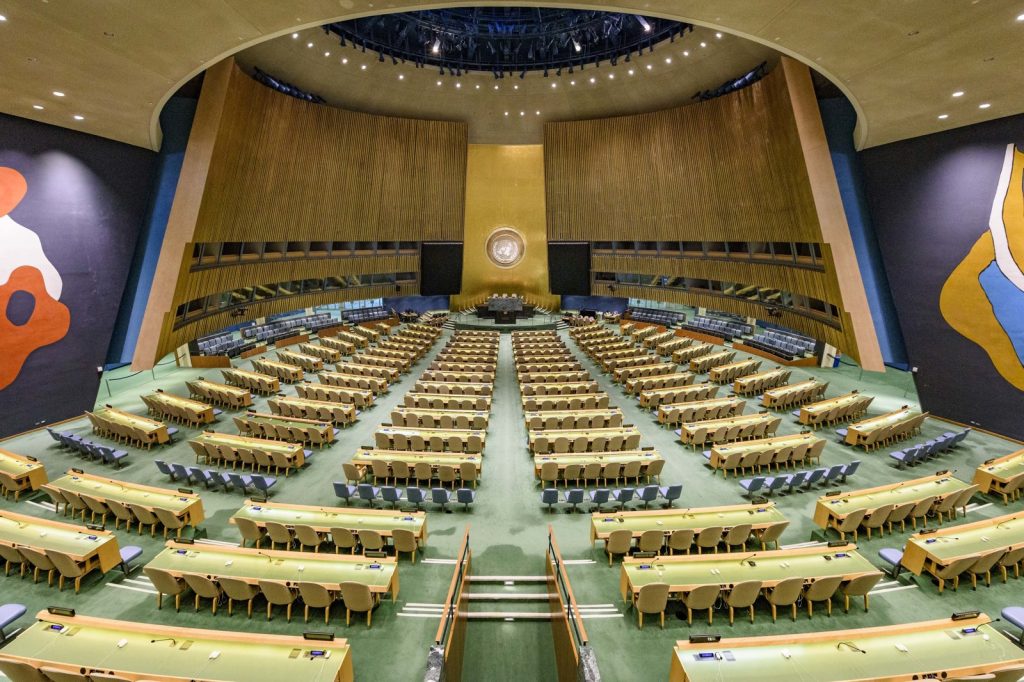
“The U.N. is really at an inflection point,” Robert Wood told the Associated Press as leaders began arriving in New York for this year’s General Assembly. Wood served at the US Mission to the United Nations under both Republican and Democratic administrations. His verdict on the state of the world was blunt: “It was bad last year. It’s not much better this year.”
The 81st session opened on Tuesday, September 22, with the General Debate running through September 28 for the organisation’s 193 members. Brazil speaks first, as tradition has it, and the United States follows. The session carries the theme “Restoring Trust, Managing Transformation: A United Nations That Delivers for All”, which tells its own story. Trust has to be restored because it was lost.
What changed in a year
The list of shocks is long. A US military operation removed Venezuela’s Nicolas Maduro from power. The United States and Israel launched a joint attack on Tehran, and the fighting has since pulled in nearly every country in the region and effectively shut a critical waterway, the Strait of Hormuz. Russia’s war in Ukraine, more than four years old, shows no sign of ending, and diplomatic efforts keep failing. An Ebola outbreak in Congo and Uganda in May exposed how thin the world’s preparation for the next pandemic still is. Earthquakes in Venezuela and Colombia and flash floods in Nepal and Tibet added to worries about a warming planet.
For families far from New York, these are not abstractions. The communities hit by floods and quakes, and the families living near the fighting, are waiting on an international system that diplomats themselves describe as stuck.
Diplomats speak, mostly off the record
One European diplomat and another official told the AP, speaking anonymously, that the world is no better off than a year ago and has grown more unstable. They pointed to attacks on international law, collapsed or missing mediation, and no consensus on climate or on peace and security. A Gulf official said a return to some predictability would be enough.
Secretary-General Antonio Guterres has called this an “era of deep uncertainty”, with power shifting and institutions needing to change. Slovenia’s foreign minister, Tone Kajzer, put it more plainly: “In international relations, everything is changing: the friendships are changing, and alliances are changing.” What stays fixed, he said, is national interest, and the task is to line those interests up “so that we live in peace and not in a permanent conflict.”
Who is in the room
Some 120 leaders are due to speak. President Donald Trump addresses the hall on Tuesday, and Foreign Policy reported that British Prime Minister Andy Burnham and Japan’s Sanae Takaichi also take the podium that day. France’s Emmanuel Macron gives his farewell speech. Germany’s Friedrich Merz dropped out at the last minute, and China’s Xi Jinping stays away because he is meeting Trump in Washington. Iran’s Masoud Pezeshkian is due on Wednesday, and India’s foreign minister, S Jaishankar, speaks on September 26.
The real work may happen in corridors, where officials hope to meet adversaries and allies on Hormuz and on runaway artificial intelligence. Guterres himself leaves at year’s end after ten years, and the Security Council has held a third straw poll on September 18 without producing a consensus successor. Seven candidates remain.
Sources
- UN General Assembly : Latest News Headlines, Videos and Photo Galleries on UN General Assembly | Business Standard
- A world in turmoil walks into the UN, looking for a way out – Economic Times (AP)
- UNGA Convenes With Uncertainty on the Horizon – Foreign Policy