
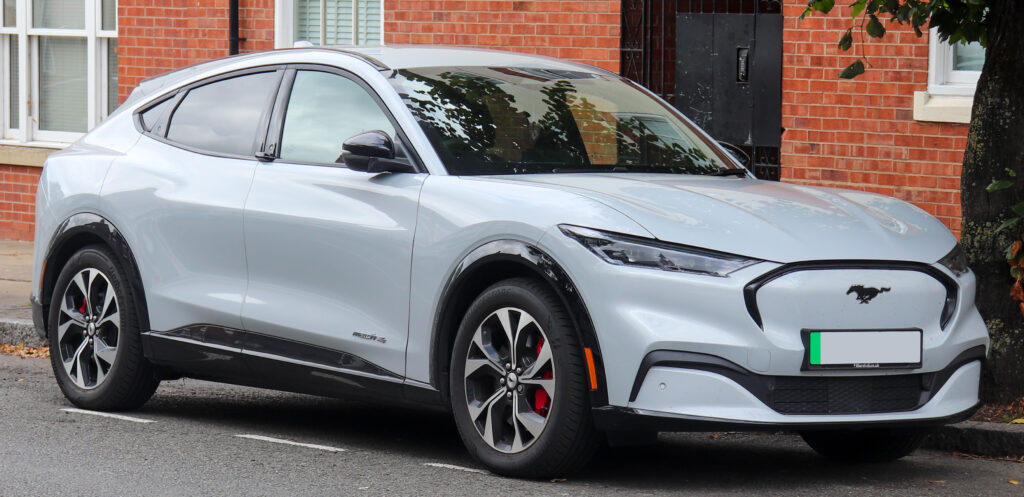
Londoners who opened Uber this month and ordered an UberX, Comfort or Electric may have been matched with a car that nobody was really driving. Uber and the British startup Wayve began supervised autonomous rides in the city on September 3, the first paid robotaxi trips in the UK, and they beat Waymo to it.
The cars are all-electric Ford Mustang Mach-Es running the Wayve AI Driver. A trained private hire driver, licensed by Transport for London, sits in the front seat. Uber says that person does not control the driving, and will be phased out over time in favor of fully driverless vehicles.
How riders get one
It is not guaranteed. Riders can opt in under Trip Preferences in the app’s settings to improve their odds, and more than 140,000 Londoners already have. Even when matched, they can accept the Wayve ride or switch to a regular car before it arrives. Fares are shown upfront, at no extra cost. Inside, a screen available in 64 languages lets passengers start the trip and see the planned path.
Supply is tiny. Wayve has about 15 vehicles registered with TfL. Service covers all of London except the airports, with no geofence, according to Wayve spokesperson Julianne McGoldrick. Uber maintains the cars with UK fleet operator Otto Car, and Wayve stays in charge of the driving system.
No lidar, no maps
What sets Wayve apart is how it drives. The company, founded in 2017 by two Cambridge machine learning PhD students, calls its approach AV2.0: a single learned AI driver in place of hand-engineered stacks, HD maps and rules. It uses cameras and radar but no lidar, the laser sensor Waymo and many rivals rely on. That puts it closer to Tesla. Wayve says it trained on London’s roads since 2018, and that the software can adapt to new roads, weather and cities much as a human driver does.
Money is behind it. Earlier this year Wayve raised $1.2 billion from Uber, Nvidia and Stellantis, as well as Nissan and Mercedes-Benz, according to TechCrunch. London is the first of 12 markets planned under the Uber partnership. A Nissan Leaf version, using Nvidia DRIVE Hyperion, starts in Tokyo later this year.
Alex Kendall, Wayve’s CEO and co-founder, called London “one of the most complex driving environments in the world.” Transport Secretary Heidi Alexander called the launch “a major milestone for the future of transport in London,” while stressing the continuing role of people who work in the sector today. Business Secretary Jonathan Reynolds praised the “homegrown, British AI.”
Rivals
Waymo has said it will launch in London before the end of the year. Lyft, working with China’s Baidu, is planning its own service starting in Brent. Uber, which wants a hybrid network of human drivers and robotaxis, has increasingly clashed with Waymo’s driverless-only vision, prompting rumors of a breakup. It has also lined up Zoox, Avride, Nuro, Motional and Waabi as partners, and says it plans to spend upwards of $10 billion on robotaxis over time.
Sources
- Uber and Wayve launch supervised robotaxis in London
- Wayve and Uber Launch First-Ever Autonomous Rides in the UK




