
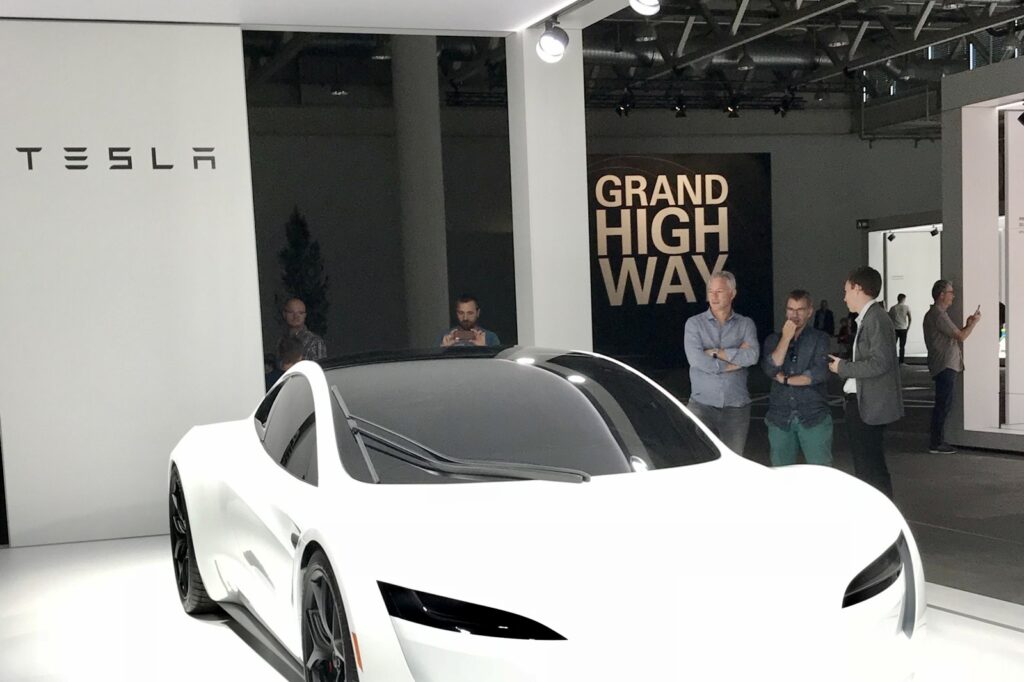
Tesla has unveiled its 2026 Roadster, promising a 620-mile range and a 0-60 mph time of 1.9 seconds. The reveal comes after years of delays since the model was first announced in 2017.
Specs and Promises from the 2017 Reveal
Tesla first introduced the second-generation Roadster in 2017, claiming it would deliver a range of 620 miles on a single charge and accelerate from 0 to 60 mph in just 1.9 seconds. These figures were reiterated in the lead-up to the October 15, 2026, reveal event, which was delayed twice due to weather conditions at the SpaceX test site in Waco, Texas. The company has not yet confirmed the final price, but analysts expect it to exceed $250,000. Prospective buyers are required to place a $5,000 deposit, followed by a $45,000 wire transfer within 10 days.
Legacy of the Original Roadster
The first Tesla Roadster, produced from 2008 to 2012, was the company’s inaugural electric vehicle and was built on a Lotus Elise chassis. According to the U.S. EPA, it had a range of 244 miles per charge and could accelerate from 0 to 60 mph in either 3.7 or 3.9 seconds, depending on the model, with a top speed of 125 mph. Tesla sold approximately 2,450 units across more than 30 countries, with the majority of later models sold in Europe and Asia during late 2012. The vehicle qualified for government incentives in several nations and was recognized by Time magazine in 2006 as a top transportation invention.
Position in the EV Supercar Market
The 2026 Roadster enters a growing segment of high-performance electric sports cars that includes the Rimac Nevera and the Lotus Evija. While the Nevera and Evija have published performance figures — such as the Nevera’s 1.85-second 0-60 mph time and the Evija’s sub-3-second claim — Tesla’s stated 1.9-second acceleration and 620-mile range aim to compete on both speed and practicality. The original Roadster’s use of a Lotus Elise chassis connects it historically to Lotus, though the new model’s architecture has not been detailed in the available sources. Tesla’s long development timeline, marked by repeated delays and sustained customer deposits, underscores the technical ambition behind the vehicle.
SpaceX Collaboration and Flight Capability Speculation
The 2026 Roadster reveal has reignited speculation about a potential collaboration with SpaceX, particularly regarding cold-gas thrusters that could enable limited aerial maneuverability. Reports from the October 15, 2026, event coverage indicated that Tesla’s website featured teaser images suggesting the vehicle might include such thrusters, fueling rumors of a flying or hovering capability. Elon Musk himself hinted at the spectacle, describing the demo as a potential “banger” and noting it could be “literally” impressive, though likely metaphorical.
These claims echo earlier reports from mid-2026 that suggested the original October 1 reveal date might have included a demonstration of a limited-edition Roadster equipped with SpaceX-developed cold-gas thrusters. The thrusters were rumored to be designed not for sustained flight but for short bursts of lift or stabilization, possibly enhancing handling or enabling novel driving dynamics. Despite the excitement, Tesla has not confirmed whether the production 2026 Roadster will include such features, leaving the technology in the realm of demonstration or optional performance packages.
The idea of a flying Roadster traces back to Musk’s long-standing interest in blending aerospace and automotive innovation, a theme revisited during his appearances on podcasts and public forums where he alluded to the vehicle’s potential to “blow people’s minds.” While the core specifications focus on ground-based performance — 620-mile range and 1.9-second 0-60 mph time — the lingering ambiguity around aerospace integration continues to distinguish the Roadster’s unveiling from conventional EV launches, blending engineering ambition with theatrical presentation.
Production Timeline and Reservation History
Tesla first announced the second-generation Roadster in November 2017, initially promising production would begin in 2020. The vehicle has faced multiple delays since its unveiling, with the October 15, 2026, reveal marking the latest attempt to showcase the model after years of postponements. Early reservation holders were required to submit a $5,000 refundable deposit upon announcement, a requirement that has remained consistent through the development cycle. These long-standing reservations have contributed to sustained customer interest despite the extended wait times, reflecting confidence in Tesla’s ability to deliver on its performance claims.
Marketing Strategy And Public Reception
The unveiling of the 2026 Tesla Roadster has been highly anticipated, with a significant amount of hype surrounding its potential features and capabilities. Tesla’s use of a countdown clock on its website and CEO Elon Musk’s teasers on social media have contributed to the excitement, with many speculating about the vehicle’s price and performance.
The company’s decision to require a $5,000 deposit, followed by a $45,000 wire transfer, suggests that it is targeting a niche market of high-end buyers who are willing to pay a premium for a cutting-edge electric sports car. The fact that the original Roadster was recognized by Time magazine as one of the best inventions of 2006 and was featured in various media outlets has likely contributed to the public’s interest in the new model.
The live blog coverage of the reveal event, scheduled to begin at 4:00 PM ET, will provide a platform for enthusiasts and potential buyers to share their thoughts and reactions to the unveiling. The use of social media and live streaming will allow Tesla to reach a wider audience and generate even more buzz around the 2026 Roadster, potentially increasing its appeal to a broader range of customers.
Sources
- Tesla Roadster (first generation)
- Tesla's Roadster event is back on for Thursday night. Here's what to expect.
- Tesla Roadster reveal live: Updates from the launch of the next-gen sportscar – Engadget
Photo: Ank kumar (CC BY-SA 4.0)




