
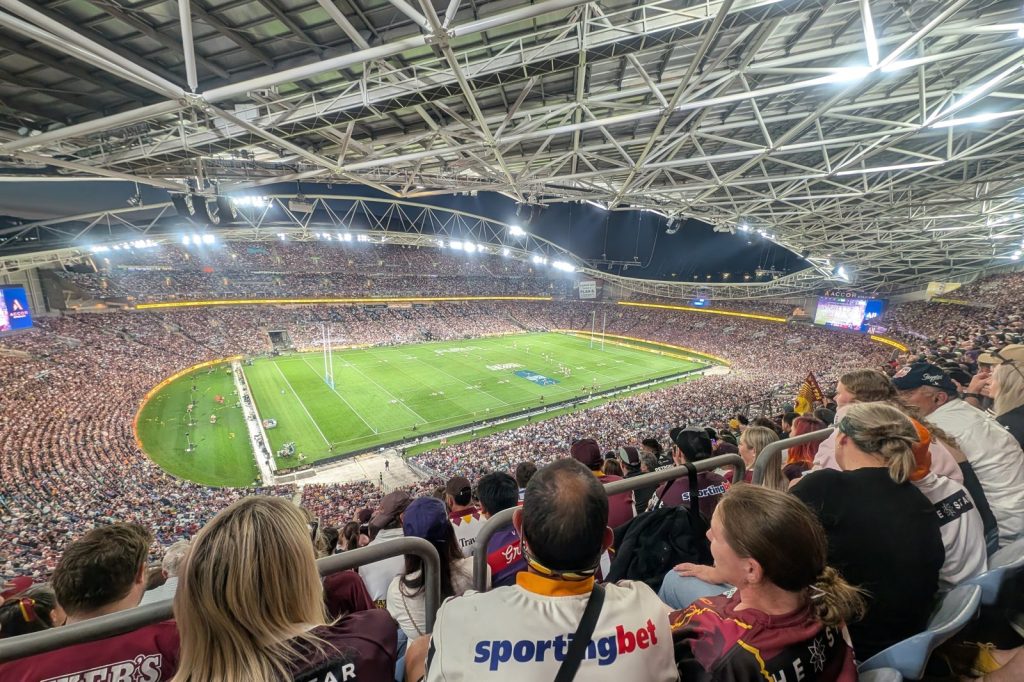
July 6. The government announced its gambling advertising bill last week. Then, seven days later, Foxtel and Nine Entertainment signed a deal reportedly worth around $5.3 billion to broadcast the NRL.
The timing is tight. The sequence matters.
First came the legislative package. The government said it wanted tighter restrictions on sports betting ads. The goal: cut down on children and vulnerable communities seeing them.
Media and gaming companies lobbied hard. They pushed to keep as much advertising inventory as possible.
They fought over where ads could run. They argued over how close those ads could sit to live play. They did not get everything.
The report makes that clear. But they got close. Then came the broadcast deal.
A combined $5.3-plus billion. Historic, if confirmed.
Nine Entertainment and Foxtel locking in the NRL for years. Marquee sports are the programming lifeblood for these networks. Gambling advertising is a meaningful piece of that revenue.
The networks do not say exactly how much. But the money flows through the same pipes.
The sequence raises a blunt question. Does the anti-gaming advertising bill actually change anything for the media giants? Their business models are built around betting revenue.
The new deal suggests those models remain solid. Record money for the sport. Record money for the broadcasters.
The same broadcasters who depend on gambling ads. The government wants to curb gambling influence.
The media companies need that revenue to keep broadcasting the sport. Those two facts sat side by side last week. The bill was announced.
The deal was signed. One after the other.
Lobbying shaped the outcome. The media and gaming companies fought for the status quo. They did not get everything.
But they got close. Close enough that the economics feeding off gambling advertising may barely feel the pinch. Close enough that the record deal got signed anyway.
For the networks, the calculus is straightforward. Marquee sports draw audiences.
Gambling advertisers pay top dollar to reach those audiences. The two are tied together. The government’s bill tinkers at the edges.
It restricts some inventory. It limits placement.
But the core relationship remains. The money still moves. Foxtel and Nine Entertainment are about to make history.
A $5.3-plus billion NRL deal. The same week the government announced it would restrict the ads that help pay for it. The contradiction is not subtle.
The bill was supposed to reduce exposure. Children and vulnerable communities were the stated concern.
But the media companies signed a record deal anyway. The economics have not changed. The revenue is still there.
The advertising inventory is still valuable. The loopholes are still wide enough to drive a broadcast deal through.
One week. Two events. The government’s legislative package and the industry’s response.
The order tells the story. The bill came first. The deal came second.
And the deal dwarfed the bill.




