
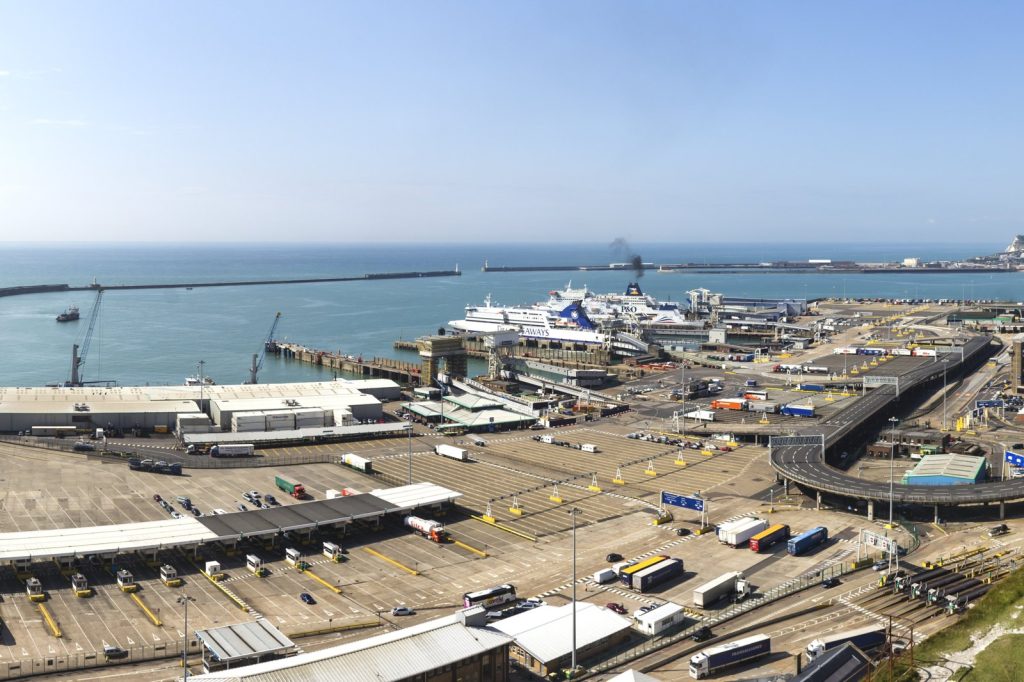
DOVER, September 6 — Hundreds of black-clad, masked demonstrators blockaded roads around the Port of Dover on Saturday, briefly halting ferry traffic between England and France in the highest-profile action yet by Patriot Platform, a British anti-immigration movement that describes itself as a Christian army of patriots. The mechanics here are straightforward: the group targeted the harbour where small boats carrying Channel migrants come ashore, with demonstrators in balaclavas streaming onto surrounding roads, chanting slogans including “stop the boats” and “send them home,” then marching through the town.
The Port of Dover confirmed all traffic in and out was stopped due to what it called an ongoing public order incident on Saturday morning, with traffic flowing again by around noon. Kent Police said it was aware of the protest and engaging with those taking part.
Patriot Platform’s organisers claim the movement has signed up more than thirty-six thousand supporters nationwide. The catch is, that figure is self-reported and promoted heavily on social media and video platforms — there is no independent verification. What is verifiable is the group’s stated aim: to “reclaim our borders, restore order and send the message that Britain belongs to the British.”
The Context: Channel Crossings and Political Failure
The movement did not emerge in a vacuum. More than forty thousand people made the dangerous small-boat journey from France last year, and successive British governments have struggled to stop it. That failure has fuelled a wave of anti-immigration protests across the country through 2025 and 2026.
Supporters frame Patriot Platform as ordinary citizens stepping in where they believe the state has failed to secure the border. They point to its rapid online growth as evidence of mainstream public frustration.
On closer reading, this narrative of spontaneous civic action has gaps. The group’s coordinated uniforms, masked appearance, and targeted blockade of critical infrastructure suggest something more organised than a spontaneous outpouring.
Two Readings: Vigilantes or Vigilant Citizens?
The UK government condemned the blockade, saying it went well beyond peaceful protest, while stressing the right to demonstrate lawfully. Civil liberties observers note the tension between that right and actions that shut down critical national infrastructure like a major international port.
Anti-extremism monitoring group HOPE not hate characterises the group very differently from its self-presentation. They describe Patriot Platform as a vigilante network with a hard-right, ultra-nationalist character, and warn that masked, coordinated blockades risk intimidation and public disorder. Follow the money — or in this case, follow the mobilisation.
The Dover blockade represents an attempt to convert online following into physical presence, a transition that many movements attempt but few achieve at scale.
What Follows
Authorities have said they will review footage of the blockade. Organisers have signalled further demonstrations in the days ahead as the movement seeks to turn its online support into repeated street mobilisations.
The outcome of that effort — whether the thirty-six thousand claimed supporters materialise in person, or remain clicks and views — will determine whether Patriot Platform becomes a sustained political force or a brief flare-up in Britain’s long-running immigration debate.




