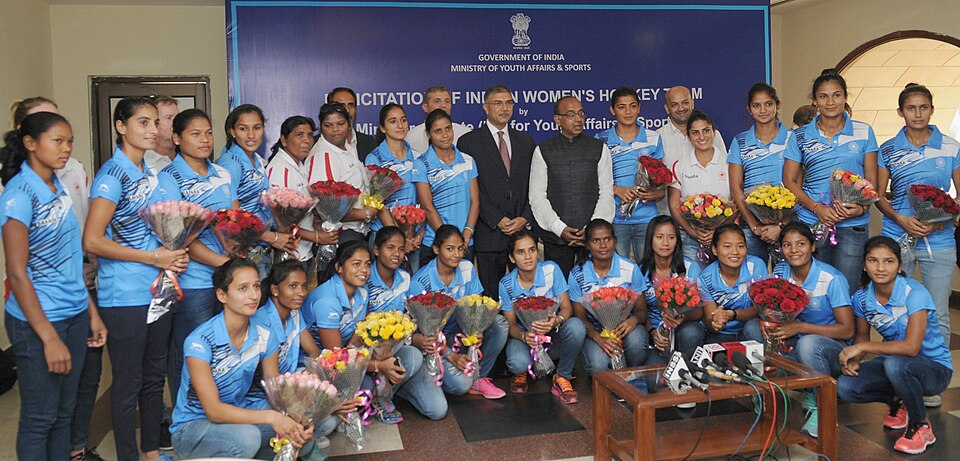
One goal decided the Women’s Junior Asia Cup. India beat the hosts, China, 1–0 in the gold medal match on 13 September in Hulunbuir City, in China’s Inner Mongolia Autonomous Region, and walked away with the title.
The Asian Hockey Federation described a tight final in which both teams fought for control. India found the winner and then held on. No. 42, Mane Sanika Chandrakant, was named Player of the Match, and she ended the ten-day tournament, played from 4 to 13 September, with seven goals.
How India got there
Ten teams, split into an Elite Pool and a Challenger Pool, played through to classification matches, quarter-finals, semi-finals and medal games. India’s pool results were lopsided: 11–1 over Malaysia, 7–0 over Japan, then a goalless draw with China. In the knockouts they beat Pakistan 19–0 in the first quarter-final and Korea 5–1 in the semi-final.
China, with home supporters behind them, won their pool games 6–1 against Malaysia, 4–1 against Japan and 3–0 against Korea. They dispatched Kazakhstan 4–0 in the quarter-final and Japan 6–0 in the semi, before the narrow loss in the final.
Japan took bronze. After that semi-final defeat they came back to beat Korea 2–0 on the last day. They had reached the semis by beating Bangladesh 2–0.
Lower down the table
Bangladesh won the Challenger Pool in style, with scores of 7–0 over Chinese Taipei, 4–0 over Kazakhstan, 6–0 over Hong Kong China and 5–1 over Pakistan. They then beat Malaysia 2–1 in the fifth-place match. Kazakhstan beat Pakistan 2–0 for seventh, and Chinese Taipei beat Hong Kong China 3–1 for ninth.
Two players tied on seven goals: Chandrakant and Bangladesh’s Rimon Sharika. India’s Supriya and Yadav Purnima each scored six.
The federation, which works with 31 member national associations, thanked the Chinese Hockey Association, the local organising committee, volunteers, umpires and technical officials for staging the event.