Toyota’s RAV4 Plug-in Recall Began With a Rear Motor That Failed Safely
The Technical Reality of a Software Initialization Error
A field report from Japan involving a rear motor failure has led to a significant recall affecting 31,000 vehicles in the United States. The defect stems from an initialization process at startup that occasionally fails to complete correctly within the motor generator electronic control unit.
The component responsible for the issue is listed as “Inverter Assy, HEV Motor Control,” specifically the MG-ECU supplied by Denso Corporation of Kariya, Japan. This unit acts as the computer instructing the inverter on how to drive the plug-in system’s electric motor-generators. According to the defect report filed with the National Highway Traffic Safety Administration, the problem is confined to MG-ECUs running one specific software program.
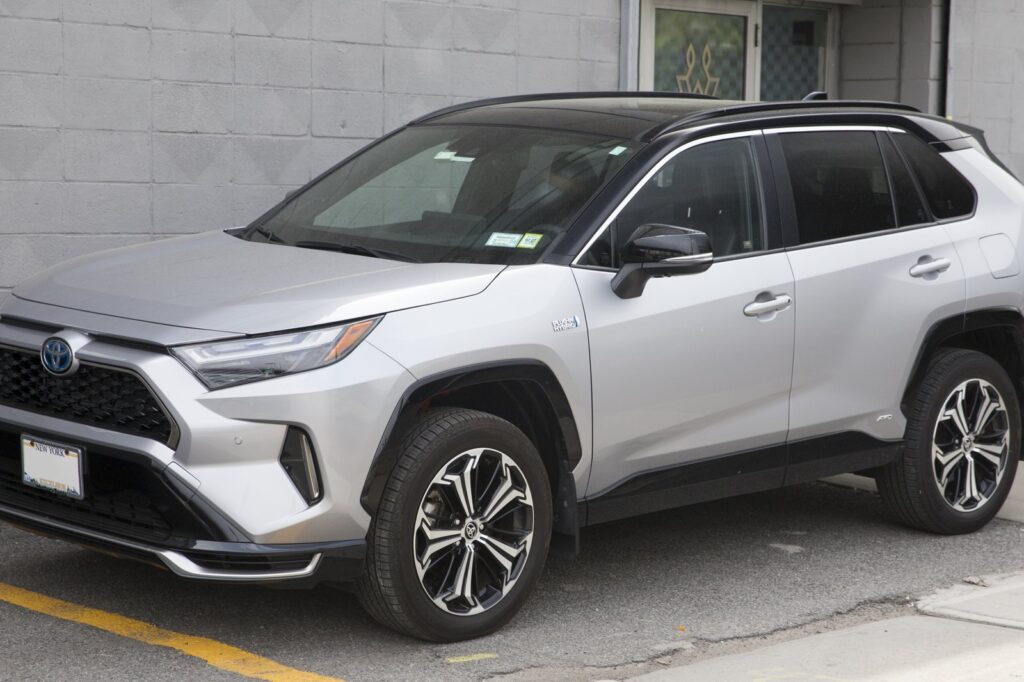
The NHTSA campaign number 26V659 and Toyota campaign 26TA22 cover 30,978 2026 RAV4 Plug-in Hybrids built from July 22, 2025, through Aug. 19, 2026. The automaker estimates that 100% of these units contain the defect. Toyota’s own announcement rounds this figure to approximately 31,000 vehicles.
Every time the system starts up, it must run an initialization process for those motors. In some cases, the process does not finish correctly, and the control mode required for higher speeds becomes unavailable. The fault typically appears when the SUV reaches a speed that calls for that specific mode, causing warning lights to come on and the plug-in hybrid system to either drop into a fail-safe driving mode or shut down.
Why the Rear-Motor Failure Was the Mild Version
The chronology of the issue begins between June and August 2026 with a field report from Japan, where the RAV4 plug-in went on sale March 9. A driver there saw warning lights and found the vehicle could only be driven in front-wheel drive at limited speed. Using dealer inspection data, Toyota identified a communication malfunction at the moment the rear motor generator switched from its lower-speed control mode to the one used at higher speeds.
Losing the rear motor is an inconvenience that forces the SUV into a fail-safe limp-home mode and disables rear-wheel drive. This leaves the vehicle driving on front-wheel power only, which is the way a hybrid system is supposed to fail safely. Repeated bench testing of the start-up sequence showed that, under certain conditions, the rear motor’s initialization could fail.
The detail that matters here is the distinction between the field failure and the reproduction in U.S. testing. The failure reported from the Japanese field and the failure Toyota reproduced in testing are not the same. While losing the rear motor results in a limited-speed mode, Toyota’s engineers then tested what the same software flaw would do to the motors up front.
The answer included a full shutdown of the plug-in hybrid system at speed. This scenario is the scarier one because a front motor generator failure at higher speeds can shut down the entire plug-in hybrid system while the vehicle is still in motion. Lab and on-road testing confirmed the software bug can trigger a complete loss of motive power, not just a reduction.
The Scope of the Recall and Safety Implications
Toyota dealers will update the affected software free of charge to address the defect. Owner notification letters are expected to be mailed beginning Nov. 22, according to NHTSA, with completion by early December. Toyota said affected owners will be notified by early December as well.
The recall notice explicitly warns that the defect could increase the risk of a crash. An unexpected powertrain shutdown can cause a loss of drive power, increasing the risk of a crash, the NHTSA stated in its notice. The software issue could cause the vehicle’s plug-in hybrid system to reduce power or shut down when driven at higher speeds.
No crashes or injuries have been reported in the U.S. market related to this defect so far. Toyota has logged a limited number of field reports and warranty claims tied to the US market, with no confirmed crashes or injuries reported to date. This stands in contrast to broader industry issues where power-loss complaints have surfaced across more models.
Toyota is not new to this kind of power-loss trouble. The automaker issued a similar warning earlier this year for approximately 9,000 model year 2026 C-HR vehicles whose hybrid system can suddenly lose power. Both recalls show how software problems in electrified powertrains keep surfacing as these systems roll out across more models.
The Fix and Future Outlook
The fix itself is straightforward with a software update to the motor generator ECU, done at no cost to the owner. Dealers will reflash the motor generator ECU as the permanent fix, and the update carries no charge to owners regardless of warranty status. Owners of involved vehicles can run their vehicle identification number through Toyota’s recall portal or the National Highway Traffic Safety Administration database rather than waiting on the postal schedule.
This event highlights how software issues have become a recurring theme across the brand’s recent lineup. The root cause lives in how the motor generator ECU initializes at startup. If that process does not complete correctly, the higher-speed control mode for the electric motor generators is not available when the driver needs it.
The technical reality of modern electrified powertrains means that under the hood, a failure can manifest as a software glitch rather than a mechanical breakdown. Owners should watch the mail for recall notices and check their status proactively. The detail that matters is ensuring the vehicle’s control unit updates to prevent a total loss of motive power while driving.
Sources
- Toyota’s RAV4 Plug-in Recall Began With a Rear Motor That Failed Safely
- Toyota recalls 31,000 RAV4 plug-in hybrids that may shut down at high speeds
- Toyota Recalls 30,000 RAV4 Plug-In Hybrids Over Motor That Can Shut Down
Photo: Mr.choppers (CC BY-SA 4.0)