
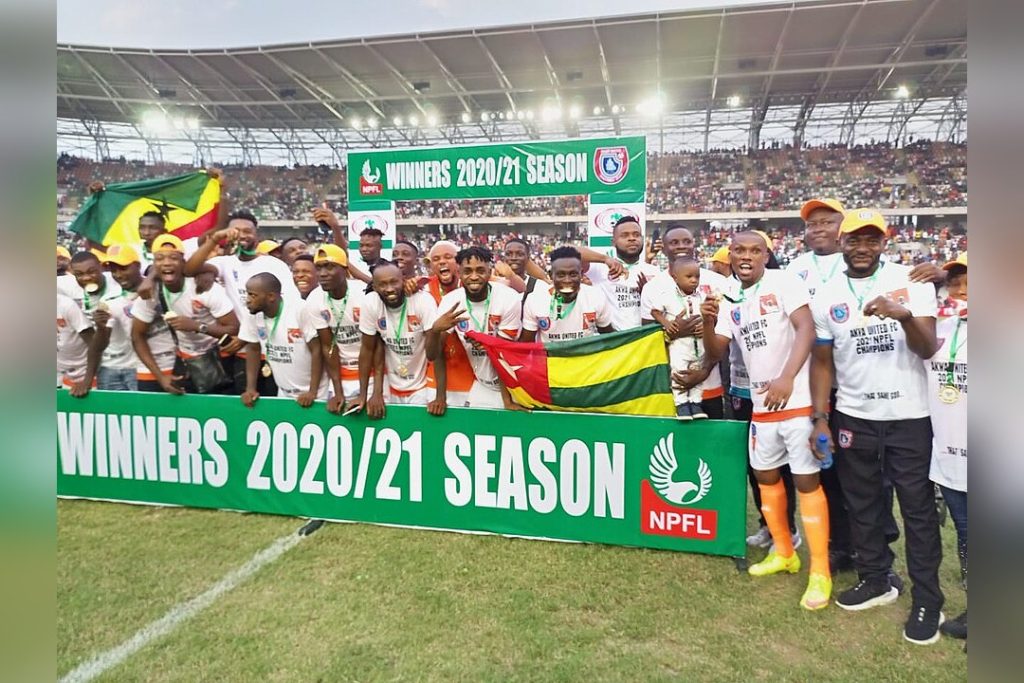
The prize money increase for Nigeria Premier Football League winners did not happen overnight. It is the product of four years of quiet, grinding work inside the league’s boardrooms — and inside GTI Asset Management & Trust Limited, the financial firm that bet on Nigeria’s top flight when few others would. GTI is a strategic partner to the NPFL.
That partnership began in 2021, when the league was struggling. Clubs were broke.
Sponsors had fled. The broadcast product was weak. Match attendance was down.
Into that gap stepped GTI, a Lagos-based asset management company with no prior track record in football. They brought money, but they also brought a plan.
Andrew Ekejiuba, GTI’s head of media and publicity, laid out that plan in a statement issued in Lagos on July 3. The statement praised the National Sports Commission and the Nigeria Football Federation for the prize money increase. But it also made clear that the increase was not the starting point.
It was a milestone on a long road. GTI’s work, Ekejiuba said, focused on corporate governance, commercial value and investor appeal. Those are dry words.
They mean something on the ground. They mean insisting clubs file audited accounts.
They mean enforcing licensing standards. They mean building a league structure that a serious sponsor can look at and not laugh. That structure did not exist four years ago.
The NPFL was a collection of teams playing in half-empty stadiums, with no central marketing, no reliable data on players or matches, and no coherent broadcast strategy. GTI helped change that.
They brought in broadcast partners. They pushed for better production quality. They began the slow work of convincing investors that Nigerian football was not a lost cause.
The prize money increase is the most visible result of that work so far. But Ekejiuba warned against premature celebration. He said substantial work remains.
He listed the areas: governance, club licensing, infrastructure, production quality, content and data management, financial accountability and fan engagement. That is a long list.
It is not a list that gets finished in one season. The NSC’s additional financial commitment, Ekejiuba said, would help accelerate development. But he called the collaboration among football’s key institutions “a means to an end” — not an end in itself.
The end is a league that can stand on its own, attract its own sponsors, sell its own broadcast rights, and pay its own bills. GTI’s commitment, Ekejiuba said, is to work with the NPFL to build an accountable and transparent football ecosystem.
That ecosystem is what will attract more partners and sponsors. The prize money increase is a signal to those partners that the league is serious. It is not the whole story.
The whole story is still being written. It is written in the governance reforms that get no headlines. It is written in the club licensing inspections that happen quietly.
It is written in the data management systems that fans never see. The prize money increase made the news.
The work that made it possible did not.




