
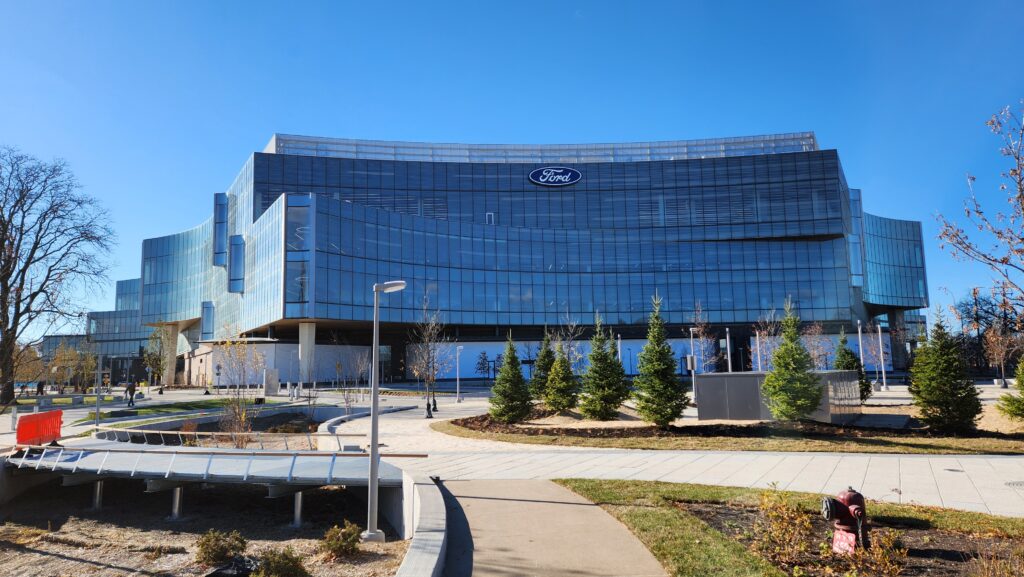
DEARBORN, June 28 — Ford Motor Company has brought back 350 veteran engineers — some former employees, others who had been working at suppliers — after discovering that artificial intelligence and automated systems simply could not match the human touch when it comes to quality control. The company’s chief operating officer, Kumar Galhotra, told reporters that Ford had been “relying more and more on automated quality systems” and found the results disappointing.
So the automaker “brought back technical specialists,” Galhotra said, and those specialists now “hunt for failure points before a part ever reaches the plant floor.” For communities across Asia where families depend on reliable vehicles for daily life and livelihoods, this shift matters. A car that leaves the factory floor with hidden faults doesn’t just mean a warranty claim — it means a tricycle driver in Manila loses a day’s income, or a family in Bangkok faces an unexpected repair bill that stretches the monthly budget.
Charles Poon, Ford’s vice president of vehicle hardware engineering, offered a candid assessment. “Mistakenly we thought that by just introducing artificial intelligence and ingesting the design requirements that we had, that that would produce a high-quality product,” Poon said. These so-called “gray beard” engineers — a term used in the industry for seasoned veterans — are now embedded in Ford’s quality processes.
The company is not abandoning its artificial intelligence ambitions entirely, but it has learned a hard lesson about the limits of automation. Closer to home, the news resonates with families across the Philippines and Southeast Asia who have long known that experience and intuition matter.
A factory worker in Thailand who has spent decades assembling transmissions, or a mechanic in Jakarta who can diagnose an engine problem by sound alone — these are skills that algorithms struggle to replicate. The rehired engineers include both former Ford employees and specialists who had been working at supplier companies. Their job is to catch problems before parts ever arrive at assembly plants, a proactive approach that Ford executives believe will improve quality more effectively than automated systems alone.
What this means for people across the region is straightforward: Ford is betting that human judgment, honed over decades, still has a place in modern manufacturing. Whether this strategy pays off in the form of more reliable vehicles for Asian markets remains to be seen, but the company is clearly listening to the engineers who know where the weak spots hide.




