
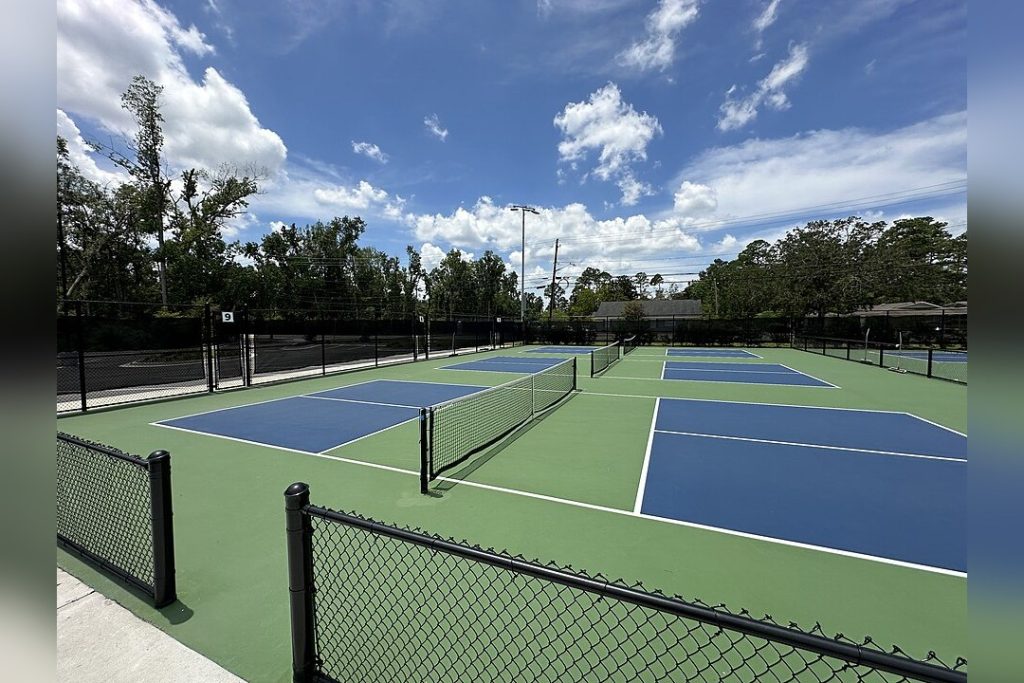
KOBE — The hardest part of any sport is often finding someone to play it with. DPC KOBE is trying to erase that barrier entirely this July. The venue has scheduled a series of “Open Play” sessions for the first half of the month.
No partner required. No club membership needed.
Just a reserved time slot and a willingness to show up alone. This is not a tournament. No brackets, no finals, no pressure.
The format is doubles pickleball, and players form pairs naturally with whoever else walks through the door. The venue calls it an “open-door approach.” For a region like Kansai, where social sports can feel closed off to outsiders, that distinction matters.
The schedule runs through the first half of July. Session lengths vary by date, but within a booked slot, players come and go as they please. An hour between errands works.
A full afternoon works too. The venue designed the sessions so they can be stacked alongside other clinics or events at the same location. DPC KOBE split the program into three levels: Beginner, Intermediate, and All Levels.
The Beginner sessions target people still learning the rules and basic movement. Intermediate and All Levels cater to those who want match-style play.
A first-timer and a veteran can both find a session that fits. Neither will feel out of place. This structure is the core of the idea.
Traditional sports leagues in Japan often require a commitment — a fixed team, a regular partner, a schedule that does not bend. That rigidity keeps people out.
The Open Play model inverts that. It asks nothing upfront. It offers flexibility in return.
For families, the appeal is obvious. A parent can drop in during a free hour. A child can try the sport without signing up for a season.
For individuals new to the area, it offers a low-stakes way to meet people. No one is locked in.
No one is left out. Pickleball itself is growing across Japan. The sport is easy to learn, requires minimal equipment, and fits into smaller spaces than tennis.
But growth alone does not solve the access problem. A sport that nobody can play is just a rumor.
Open Play addresses that directly. The venue is betting that the solo participant is a real demographic. People who want to stay active but do not want the social overhead of a team.
People who have the time but not the partner. People who just want to show up and hit the ball. July is the test.
If the slots fill, the model could spread. If they sit empty, the idea was worth trying anyway.
For now, the offer is simple. Book a slot. Show up alone.
Play doubles with strangers. Leave when you want.
That is the whole proposition. No fine print. No hidden expectations.
Sometimes the most radical thing a sports venue can do is let people walk in the door by themselves.




