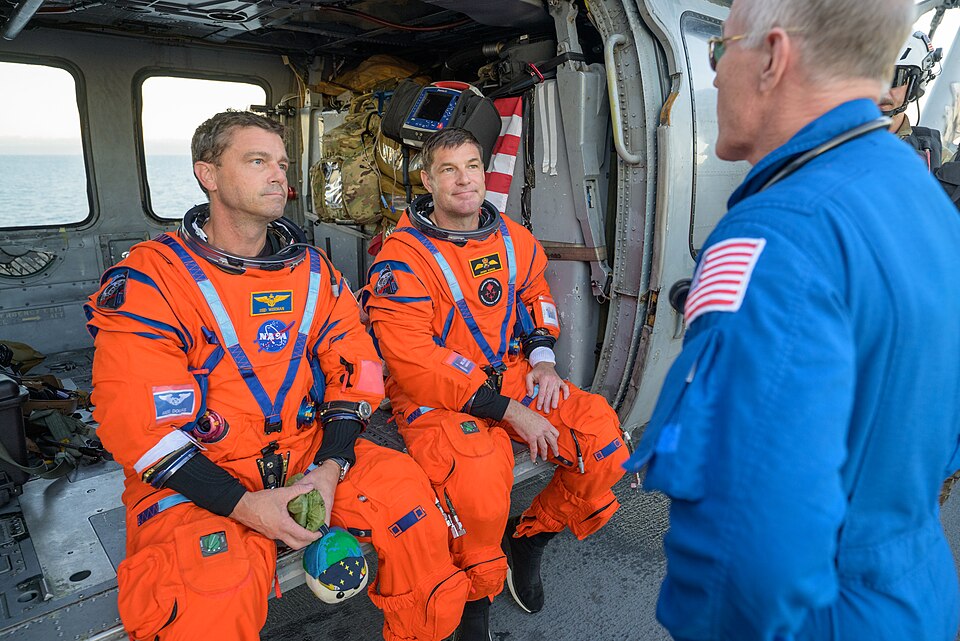
WASHINGTON, June 9 — Astronauts aboard the Artemis II mission have travelled farther from Earth than any humans before them, surpassing the record set by Apollo 13 in 1970. NASA said the Orion spacecraft reached a peak distance of about 406,778 kilometers from Earth, beating the previous mark of 400,171 kilometers, before beginning its return journey.
This achievement is a milestone in NASA’s effort to push human spaceflight deeper into the solar system and beyond low Earth orbit.
The four-person crew used the flight to test Orion’s systems in deep space, including navigation, communications and the spacecraft’s heat-shielding ahead of reentry. The mission is an approximately 10-day journey around the Moon without a landing, and it is paving the way for a planned crewed lunar landing on a later mission.
During the mission, NASA also captured imagery of a total lunar eclipse seen from the far side of the Moon, offering a perspective on the phenomenon never recorded from a crewed spacecraft.
NASA officials described the distance record as a symbolic reminder that human exploration is once again reaching beyond the boundaries set during the Apollo era, more than five decades ago. This milestone marks a significant step forward in NASA’s plans for human spaceflight. Astronauts on the Artemis II mission have demonstrated the capabilities of the Orion spacecraft, and the success of this mission will inform future crewed missions to the Moon and beyond.
The testing of Orion’s systems in deep space has provided valuable insights into the performance of the spacecraft, and this knowledge will be crucial in planning for future missions. As the Artemis II mission comes to an end, NASA is already looking ahead to the next steps in its plans for human spaceflight.
The agency is working towards a planned crewed lunar landing on a later mission, and the success of the Artemis II mission has brought this goal one step closer.
With the Artemis II mission achieving a new record for human distance from Earth, the future of space exploration is looking brighter than ever. The capture of imagery of a total lunar eclipse from the far side of the Moon is also a significant achievement, offering a new perspective on this phenomenon.
This imagery will provide scientists with valuable insights into the Moon’s behavior during a lunar eclipse, and it will help to advance our understanding of the Moon and its place in the solar system. As NASA continues to push the boundaries of human spaceflight, the success of the Artemis II mission is a reminder that the possibilities for space exploration are endless. With the agency’s plans for future missions already underway, the next few years are likely to be an exciting time for space enthusiasts around the world.