
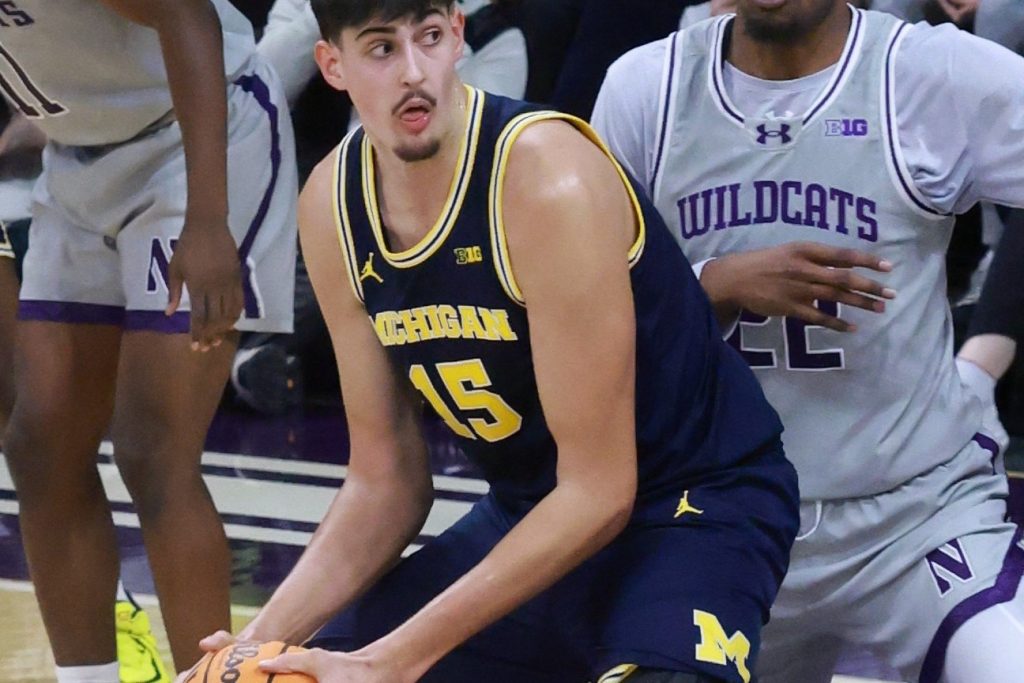
The silence was the loudest part. Aday Mara, the 7-foot-3 Spanish center who spent his freshman year at UCLA, sat through the entire pre-draft process waiting for a real conversation with the Oklahoma City Thunder. It never came.
The Thunder, a team holding significant draft capital, barely spoke with him. “It was little surprising,” Mara said.
That admission, tucked inside a broader reflection on the chaotic NBA pre-draft machine, is worth stopping on. Because it tells you something about how the league really works — and how badly the human side can misfire. Think about the setup here.
Mara is a legitimate prospect. He played in the Pac-12.
He is seven-foot-three. Teams spend millions on analytics departments, on international scouting, on private workouts and background checks. They fly prospects across the continent, ask them out-of-pocket questions, shake their hands, size them up.
The pre-draft process, as Mara described it, is a whirlwind. Your head is on a swivel for weeks. It is supposed to be the time when connections get made, when a team decides if a player fits.
And yet, for Mara, one of those conversations never really happened with Oklahoma City. The lack of dialogue left him with questions about where he stood.
That is not a minor complaint. It is a direct look at a system that, for all its data and scouting reports, can still leave a player stranded in the dark. The Thunder kept their cards close.
Mara was left on the outside looking in. For families across Asia who follow young basketball talents chasing NBA dreams, this story hits close to home.
The path from promise to the pros can feel like a blur of closed doors and quick handshakes. Mara’s experience is a familiar tale of a young person navigating an opaque system, wondering if their talents are being seen by the right people. What it means for people is that even in a global league built on data and scouting, the human element of connection can sometimes get lost.
A player can dominate in college, show flashes of real ability, and still end up wondering if anyone was paying attention. The Thunder are a team known for its deep roster of young talent and a stockpile of future picks. They have the flexibility to be patient.
They can afford to let prospects come to them. But Mara’s situation suggests that patience can tip into something colder — a kind of silence that leaves a player guessing.
The NBA pre-draft process, from the outside, looks chaotic. It is. Mara admitted as much.
But chaos is one thing. Silence is another.
There is no way to know what the Thunder were thinking. Maybe they had already made up their mind. Maybe they saw something they did not like.
Maybe Mara was never on their board. But the fact that he was surprised — that he noticed the absence of contact — means the process failed him in some small but real way. A young player should not have to wonder if a team with significant draft capital even knows he exists.
The draft is supposed to be about evaluation. But evaluation without communication is just guesswork.
And guesswork leaves people out. Mara’s story resonates beyond basketball. For communities across the region, it is a reminder that even in a data-driven world, the human side still matters.
A conversation can make the difference between a player feeling seen or feeling lost. The Thunder chose not to have that conversation.
Mara was left with questions. That is the story. It is not a scandal.
It is not a conspiracy. It is just the quiet, ordinary way a system can leave someone behind.




